Late Payments: Why They Hurt SMBs and How to Stop Them
Discover why late payments hurt small businesses and simple ways to get paid on time.


Key takeaways
- Recognize that late payments strain cash flow and can delay hiring, inventory, and payroll.
- Replace slow paper checks with digital payment options like ACH to get paid faster.
- Set clear payment terms and automate invoices and reminders to reduce late payments.
- Offer easy online payment options so customers can pay on time.
What’s the harm in late payments?
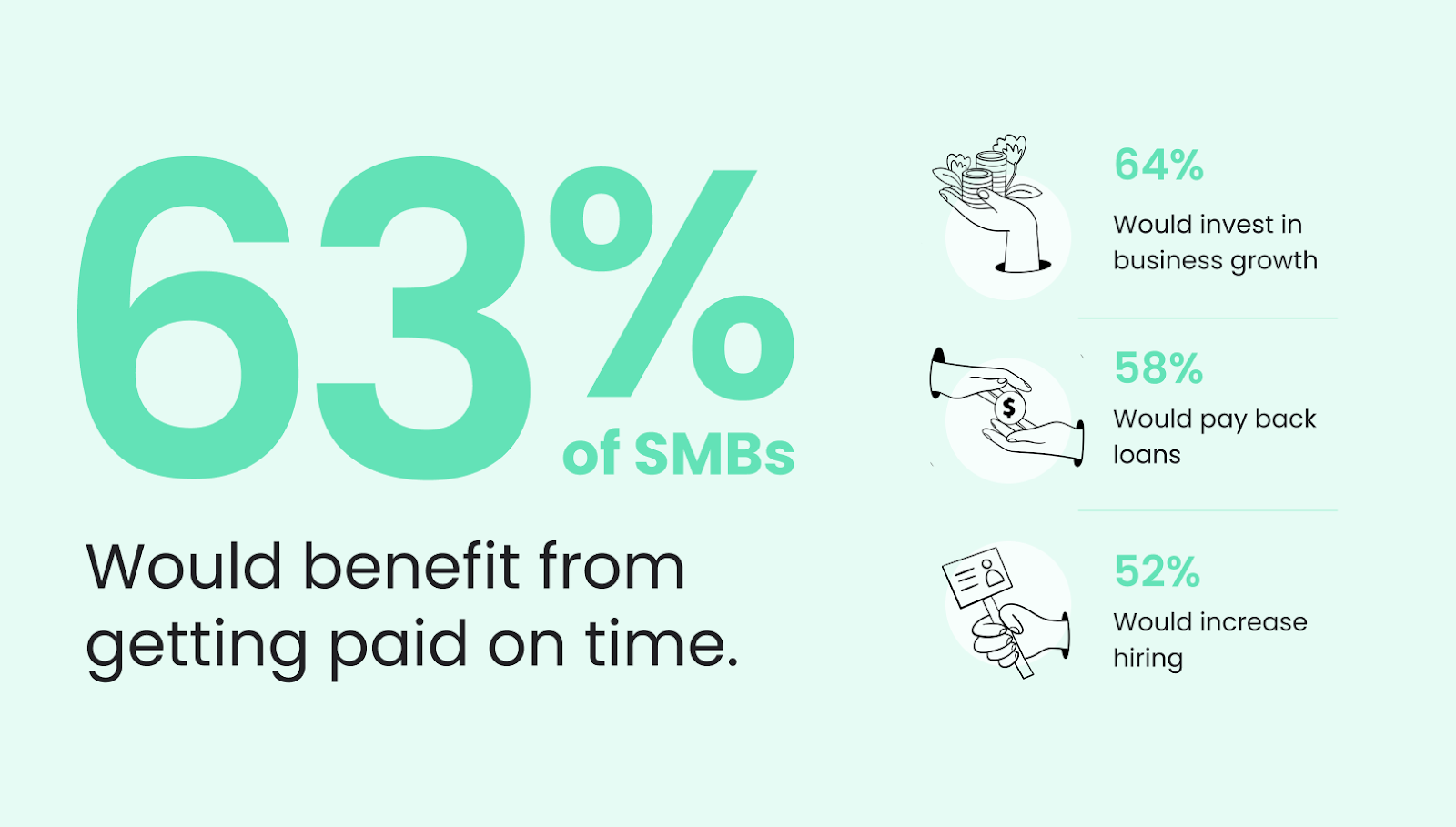
Late payments are common, so it might seem as if they are no big deal. In our survey, 59% of SMBs said they experience late payments, and 44% said late payments negatively affect their business.
The damages include delaying new hires (40%), postponing the purchase of inventory (39%), and cutting employee hours (36%).
Why late payments endure
Paying late is a flawed solution, yet many businesses still hang on to it as a lifesaver. Two main contributors keep the cycle going: cash flow issues and outdated payment infrastructure.
Cash flow issues
Maintaining a healthy cash flow—making sure more cash comes in than goes out—is a delicate dance. Delaying payments can feel like a magical solution that helps businesses stay afloat.
When businesses are paid late, they often have no choice but to delay payments to their own vendors. This creates a continuous cycle, with cash flow issues being both the cause and the result.
The payment infrastructure
Payment infrastructure is the set of methods businesses use to pay each other. Unlike consumer transactions, which lean on cards and cash, paper checks are still a common business-to-business (B2B) payment method. In fact, checks still made up 26% of B2B payments in 2025, down from 33% in 2022.
This is puzzling, since checks are slow and manual. You write checks, cut them, stuff them in envelopes, and mail them. That means days or weeks of waiting to get paid.
The process is tedious, so businesses build delay into their workflows. Due dates are often set well after the invoice date. This grows into standards like net 30, net 60, or even net 90.
Late payments remain widespread today. More than half of US small businesses are currently owed money in unpaid invoices, according to Intuit QuickBooks’ 2025 report.
How digital payments are changing the game
Digital payment tools reduce late payments by making it faster and easier to pay and get paid. Options like bank or ACH transfers replace slow paper checks, so no one waits to hear “the check is in the mail.”
The shift is already underway. The use of checks among businesses has been in steady decline for decades. This is a trend the Federal Reserve Payments Study continues to confirm. It is also evident in data previously collected by Melio.
Going digital also helps improve cash flow by:
- Tracking finances in real time so you always know where you stand
- Scheduling payments in advance so nothing is missed
- Choosing payment options like cards to defer costs to the next billing cycle
How to reduce late payments
Reducing late payments starts with clear expectations and modern tools. A few simple habits make a big difference.
- Set clear payment terms up front and put them in writing.
- Check a new customer’s payment history before you extend terms.
- Send invoices and reminders automatically so nothing slips through the cracks.
- Offer digital payment options so customers can pay quickly and easily.
Rethinking how your business pays
New tools give us a chance to pause and rethink old habits. When it comes to business payments, it’s time to push in a better direction.
Rethinking your payment habits benefits your own business and the resilience of the entire business ecosystem. Sign up for Melio to pay and get paid on your terms.
Late payment FAQs
How do late payments affect small businesses?
Late payments squeeze cash flow, which can delay payroll, hiring, and inventory purchases.
Can small businesses charge late fees?
Yes, as long as the fee is stated in your payment terms and agreed to before the work begins.
What should I do when a customer won’t pay an invoice?
Start with a friendly reminder, then follow up in writing and offer an easy way to pay online.
What are typical B2B payment terms?
Common terms are net 30, net 60, and net 90. Payment is due within that many days of the invoice.
*This blog post is intended for informational purposes only and is not intended as financial advice.
**Melio does not provide legal, tax or accounting advice, and you should consult with a professional advisor before making any financial decisions.

Why I’m happy to pay a 2.9% fee on all business expenses
This is a guest post from Ross Alcorn, the founder of Itinerary Boss and a long-time Melio user. Ross’ consultancy specializes in credit card point redemptions, and has mastered the art of turning “boring” overhead into high-value travel and business leverage. Below, Ross reveals his strategic approach behind paying a small fee on business expenses, how it consistently generates significant returns and leverage, and how you can do the same.

Choosing The Right Payment Method For Your Business
Compare the main ways to pay your business bills so you can pick what fits your cash flow.

How Accountants Can Make The Most Out Of Cloud Accounting
Discover how cloud accounting helps accountants save time, protect client data, and grow their practice.