Choosing The Right Payment Method For Your Business
Compare the main ways to pay your business bills so you can pick what fits your cash flow.


Key takeaways
- Compare each payment method by cost, speed, security, and vendor acceptance before you choose.
- Prioritize low-cost options like cash and ACH bank transfers when speed is not urgent.
- Handle checks with care, since they remain the payment method most targeted by fraud.
- Consider online payment tools so you can pay your way while your vendors get paid theirs.
Juggling payment methods
Some vendors only accept checks, while others want the payment transferred straight into their bank account. You, on the other hand, probably want to use your credit card so you can collect points for your next vacation to Cancun or for concert tickets to see Elton John. Making payments by checks, ACH bank transfer, debit, or credit cards creates a delicate dance that, if done correctly, can give your business the peaceful feeling of floating on air.
The continuous advancement of technology has evolved and innovated the traditional ways businesses make and receive payments. Today, businesses have a wide range of B2B payment methods to choose from, but it’s not always clear which one is best for each situation.
Business payments don’t come in a one size fits all answer. So how do you make sure you’re choosing the right method? There are a few pros and cons to each method, so you need to consider them all when planning your next payments. In this guide, we’ll go over the different payment options available for businesses. Gather your bills and let’s dive in.
Choose the right payment method for you
This guide covers seven payment methods. Before you pick one, weigh each option against a few key factors:
- Cost: transaction fees and monthly charges.
- Speed: how fast the money reaches your vendor.
- Security: fraud protection and how much data you share.
- Vendor acceptance: whether your vendor takes that method.
- Cash flow impact: how the timing affects your available cash.
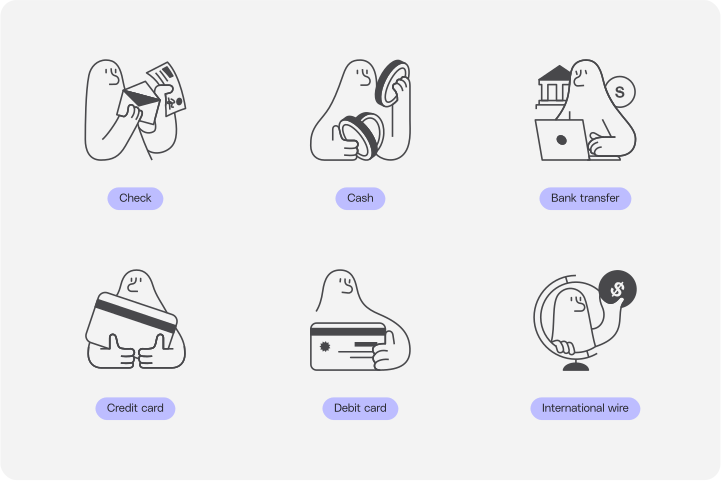
Cash
For thousands of years, humans have accepted coins and paper money. While lots has changed since then, many business owners still believe that “cash is king” and continue to accept this payment method today. When you work with a lot of local vendors, cash is an easy option. After all, no vendor has ever said “I have too much cash”. On top of that, vendors and suppliers may offer your business special discounts for cash payments.
Cash payments are a relatively safe, rapid, and low-overhead payment method that is ideal for small businesses. However, it can also be tricky, as you’ll need to be super meticulous when keeping track of incoming cash. Plus, you’ll need a good accounting system. Since you need to rely on good faith and paper records, paying with cash requires a really strong relationship and a lot of trust between you and your local vendors.
Let’s say you hand your produce vendor an envelope with $1,200 cash for the month’s vegetable supplies. You need to have faith that they will forward the money to the right person, and that they will mark your bills as paid. You can get extra assurance by asking for a receipt marked and signed as paid.
Pros and cons of paying with cash
Pros:
- Fast
- No transaction fees
- Exclusive discounts
Cons:
- Not trackable
- Not 100% secure
- Requires in-person meeting
- Not good for tax write-offs
Red flags
If you’re working with a vendor that always demands to receive payments in the form of cash, you should make sure you get proof of payment. This could be a sign that the vendor is evading taxes, and you definitely want to steer away from working with businesses like that.
Check
Checks are the payment method most targeted by fraud. In 2024, 63% of organizations faced attempted or actual check fraud. How exactly is that possible?
Well, many small business owners in the U.S. still use checks. Think about it, every time you send or hand your vendors a check you’re essentially giving out sensitive business information. Your account number, routing number, and personal signature are all on the check.
Why are checks still being used?
Improving processes and using technology to give your business a leading edge is appealing to most. So why are businesses still using such outdated, risky methods of payment? The truth is that most vendors are comfortable receiving payments this way because that’s just how they’ve always done it–no matter how slow and clunky the process is.
Writing and sending checks takes more time in the back office and adds up over the year. Ordering checkbooks, envelopes, stamps, and the extra time check handling requires all add up. Another irritating part is that even if you sent a check weeks ago, you have no control over what happens to it as soon as you put it in the mailbox.
The check journey
Let’s say you owe $450 to Speedy Suppliers, your office equipment vendor. If everything aligns and there are no hiccups along the way, your paper check’s journey will look something like this:
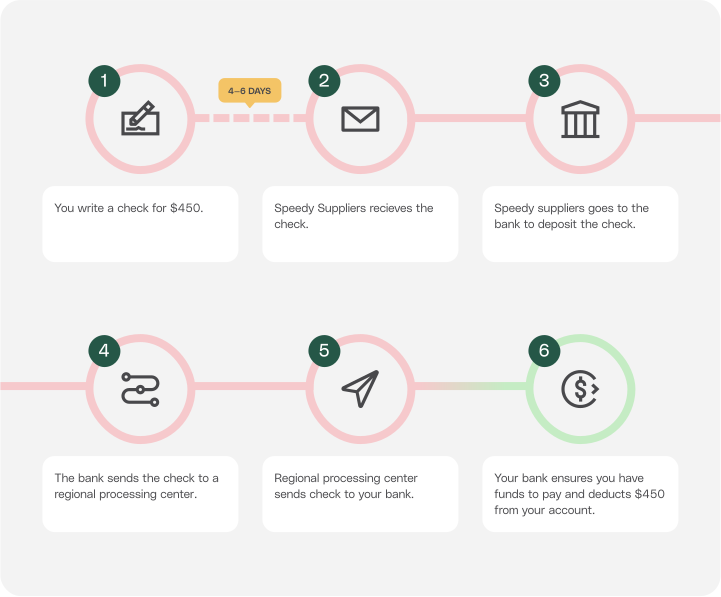
Technology has sped up this process, yet paying by check is still the slowest payment method out there.
Pros and cons of paying with checks
Pros:
- Trackable
- Easy to reconcile
Cons:
- High costs
- Time-consuming
- Lost checks
- Lots of back and forth (“where is my check?”)
- Prone to fraud
- Slow (can take several business days to arrive)
Credit card
Many people don’t know you can actually pay business bills with your credit card. Credit cards are paid off monthly, so if you schedule a payment at the beginning of the month, you don’t have to pay your bill until your billing date. That means you have more cash on hand to use now.
But while being one of the fastest payment options out there, credit cards are generally more expensive. Many vendors and suppliers don’t accept cards for business payments which makes this method a bit more limiting.
Pros and cons of paying with a credit card
Pros:
- Trackable
- Control over cash flow
- Points and rewards
- Build credit
- Secure
Cons:
- High fees (1.5%–3.5%)
- Not accepted by everyone
Debit card
Debit cards look just like credit cards, but they work in a slightly different way. Unlike credit cards, businesses need to actually have funds in their bank account in order to make a purchase with debit cards. Some businesses prefer not to use credit cards, whether because of poor credit history or personal choice.
A debit card gives businesses the convenience of making purchases without the need to carry cash. They make a payment and it immediately comes out of their bank account. That way they don’t need to predict next week’s or next month’s expenses. They get their financial overview directly from their bank account and then there are no surprises.
The issue with this is cash flow. If a business has a lot of upfront costs for supplies, rent, salary, or other expenses, it might not be able to stay afloat through the next months or down seasons.
Pros and cons of paying with a debit card
Pros:
- Trackable
- Availability
- Control debt
- Secure
Cons:
- High fees
- Spend limit
Bank transfer
An ACH bank transfer is an electronic payment sent between U.S. bank accounts through the Automated Clearing House (ACH) network. Many businesses use ACH to send and receive payments.
The networks allow for the secure electronic transfer of money between bank accounts in the U.S. ACH bank transfers are trackable, secure, reliable, and relatively fast, settling within one to two business days, with same-day ACH available.
Pros and cons of paying with ACH bank transfers
Pros:
- Trackable: Payments have an electronic footprint.
- Lower cost: Transfers usually have a low cost attached to them, if at all.
Cons:
- Bank details needed
- Slow
- Localized
- Strict cut-off times
International wire transfer
Every industry has different needs. Some businesses only work with local vendors, and some have international suppliers. Others partner with local companies and outsource some work to freelancers abroad. International wire involves sending electronic payments to a payee in a different country, either in local currency or U.S. dollars.
Sending international wire transfers across borders often costs upwards of $50 per transaction when you do it through your bank. So you may be saving on supplies, but it might not pay off in the long run as fees do add up.
Pros and cons of paying with International wire transfers
Pros:
- Cross border sourcing
- Trackable
Cons:
- High fees
- Bank details needed
- Transfer time one to five business days
Digital wallets and mobile payments
Digital wallets and mobile payment apps let businesses send and receive money from a phone or computer. Popular options include PayPal, Venmo for business, Zelle, Apple Pay, and Google Pay.
These tools are fast and easy to set up, and many customers and vendors already use them. They work well for smaller, everyday payments, especially with local vendors.
Keep a few things in mind before you rely on them. Some apps charge a fee to receive business payments or to move money to your bank right away. Others limit how much you can send, and not every vendor accepts every app. Check the terms so you know what each option costs and how quickly you get your money.
Online payment tools
Online payment tools are platforms that let you pay and get paid in one place. They simplify payments, save time, and keep everything organized.
If, for example, your vendor only accepts checks but you want to pay with a credit card, online tools can help you get around that. The right payment solution will allow you to pay your vendor’s however you want and send them a check on your behalf without including any of your business and personal info. That way you pay however you want, your vendor receives payment the way they want and your business gains that extra layer of protection.
Online payment tools have few downsides because they let you pay your way while your vendor gets paid their way, without sharing your bank details. If you want to digitize your accounts receivable, find a platform with robust features that fit your needs. Make sure platform fees work with your budget, and that it offers the security and support to give you and your vendors peace of mind.
Pros and cons of paying with online payment tools
Pros:
- Trackable
- Easy accounting (syncing with accounting software)
- Flexibility
- Easy-to-use
- International payments
- Secure
Cons:
- Higher fees (some platforms can be expensive)
- Vendor details needed
It’s all about the right payment method
The right payment method will give your business the balance of speed, cost, and security. It will also improve your vendor relationships and make the process easy for employees in both companies. Ultimately, the payment methods you use will depend on your business, the type of expenses, and the purchases you’re making.
It’s more than likely that you’ll use a mix of these payment methods in order to keep your operations running smoothly.
With Melio, you can pay your vendors by bank transfer or card, even when they only take checks, so you get to choose the method that fits your business.
Payment methods for small business FAQs
Is Zelle or Venmo better for small business payments?
Both work for small, fast payments. Zelle sends money straight between U.S. bank accounts with no fee to receive, while Venmo for business is easy for customers but charges a fee to receive payments. Pick the one your customers and vendors already use.
Is Square or PayPal better for a small business?
Square fits businesses that sell in person and want simple hardware and flat-rate pricing. PayPal is handy for online sales and invoicing since so many customers already have an account. Many businesses use both.
What is the cheapest payment method for small businesses?
Cash and ACH bank transfers are usually the lowest-cost options, since cash has no transaction fee and ACH costs little or nothing. Cards and wires tend to cost the most.
Are digital wallets safe for business payments?
Yes. Reputable wallets use encryption and tokenization to protect your account details. Still, use strong passwords, turn on two-factor authentication, and confirm you are paying the right person before you send.

Automated invoice processing: How to stop doing this manually
Learn how to automate invoice processing, save hours each week, and pay vendors on time.

6 Affordable Tactics For A More Sustainable Small Business
Discover six affordable ways to make your small business more sustainable.

Announcing Melio Accountants
Bill pay your clients will love. Manage your clients' payments, send bank transfers, and checks for free. Simple approval workflows and two-way sync with QBO.