What Is Cash Flow In Business And Why Is It Important?
Discover what cash flow in business is, its importance, and how to manage it. Learn the differences between cash flow and profit and how to maintain positive cash flow.


- Key takeaways
- What is cash flow?
- What is the difference between cash flow and profit?
- Why is cash flow so important?
- Cash flow management basics
- Main reasons for cash flow issues
- What to do when cash flow is negative
- Cash flow health = your business health
Key takeaways
- Track the cash moving in and out of your business so you can spot shortfalls before they become emergencies.
- Recognize that cash flow and profit are different, since a profitable business can still run short on cash.
- Prevent negative cash flow by invoicing on a set schedule, encouraging faster payment, and getting paid by ACH.
- Use online bill pay and card options to hold on to cash longer while still paying vendors on time.
What is cash flow?
Simply put, cash flow is the stream of cash (or cash equivalents) moving in and out of your business over a set period of time. When more cash is coming in than going out, it’s known as positive cash flow. What does negative cash flow mean? That’s basically the flipside, when outgoing cash exceeds incoming cash.
A little bit more about cash flow: real-life examples
Obviously, businesses need a consistent flow of cash for various reasons. There are suppliers and vendors to pay, rent and utility bills, accountant fees, employee salaries, and much more. But cash flow is much more than just how much cash you have.
Let’s explore what cash flow looks like with a real-world scenario:
Brian owns a car dealership in Seattle. He sells new and used cars, offers financing options, and has a service department. Because he must purchase vehicles before he can sell them, he needs big cash reserves or relies on loans.
Right now, the market could be better, and people buy new cars less often. This means Brian has an excessive number of unsold cars. As he continues to incur expenses for the purchased inventory but struggles to generate enough sales revenue, he is now facing negative cash flow—meaning he spent more money than he earned.
But wait, Brian is owed some money from customers. As he also provides financing options, he is expecting to receive more money in the next few months—including interest on cars already sold. If the cash expected to come in is higher than what he spent, that means Brian is profitable—even though his cash flow is negative. That’s great news.
What about positive cash flow, and what would that look like?
Katy is a franchise owner who operates a branch of “Gourmet Burgers” in Austin. Katy needs to pay monthly fees to the franchisor. These add up, but being a part of a well-known franchise provides an established brand and customer base. This means she has very high sales and a lot of regular customers. So, the fees end up being a small percentage of the total revenue.
She also needs to pay different vendors, rent, other bills, and payroll. By being a part of a franchise, she gets help with the budget. This enables her to keep expenses lower, meaning she has enough cash for other things she needs—like a new coffee machine that recently broke.
This last scenario highlights an important, and perhaps overlooked, aspect of cash flow: positive cash flow means you have enough money not only to pay your day to day expenses but to see the business you’re dreaming of come to life. It means you have extra cash (and peace of mind) to cover unexpected expenses or to innovate, develop, and grow your business.
What is the difference between cash flow and profit?
Cash flow is the cash moving in and out of your business. Profit is what’s left after you subtract expenses from revenue. They’re not the same thing.
When it comes to cash flow vs profit:
Profit is what’s left of the business’s revenue after all operating expenses, production costs, taxes, bills, payroll, and other expenses are paid. In other words, profit is revenue minus expenses.
Cash flow, on the other hand, measures all the incoming money (for example sales and investments) and outgoing money (expenses, loan payments, etc.) of a business in a given period. It reflects the business’s liquidity and ability to meet its financial obligations and reinvest in the company. As we’ll see in the next section, cash flow and profit are not always aligned.
Can your business be profitable and have negative cash flow?
Yes. It’s possible to have negative cash flow while being a profitable business, and vice versa. Let’s look at some real-life examples of how this works:
Imagine you’re opening a coffee shop. You take a small business loan from a local bank for $50,000. That loan represents money flowing into the business, producing a positive cash flow. But if you don’t have any customers in your first two months, you’re not generating revenue, which means your profitability is nil. Positive cash flow, without being profitable.
The reverse is also true. Let’s say you sell musical instruments, and most of your customers use the “buy now, pay later” option. You pay $3,000 for a piano, then resell it for $5,000, with the customer paying $2,000 now and $3,000 due in six months. Your cash reserves have actually gone down by $1,000 even though you netted a profit from the sale. If you are asking, what is negative cash flow, this is what it looks like, even while the business is profitable. Keep in mind though, that this scenario is quite rare.
Why is cash flow so important?
Cash flow matters because it keeps your business able to pay bills, cover payroll, and handle surprises on time.
Not having enough money to pay vendors or cover payroll is incredibly stressful. That’s the true negative cash flow meaning. However, there is more going on than just immediate expenses and it’s important to consider how much cash a business should have on hand at any given time.
Here are several reasons why cash flow is so important to a business’s short and long-term survival:
- Operational stability: Positive cash flow means the business can cover day-to-day expenses like payroll, rent, and supplies, without disrupting ongoing operations.
- Paying off debts: Lack of cash flow increases the risk of a business defaulting on loans or making late repayments, which come with penalties and fees.
- Investment and growth: Having enough cash on hand enables the business to invest in new equipment, innovate new products, and expand to new markets.
- Unexpected expenses: Positive cash flow helps keeping the business safe in the event of a market downturn or unplanned crisis.
- Credit score: Strong cash flow improves credit ratings, making it easier for a business to receive loan approvals.
- Avoiding insolvency: Even profitable businesses can fail without adequate cash flow to keep operations running.
How can negative cash flow affect a business?
Having sufficient liquid cash on hand to pay vendors and meet financial obligations is absolutely essential. Businesses that fall into negative cash flow and cannot cover expenses and payments are in a very tough spot.
It’s no surprise then that cash flow problems are among the most common reasons small businesses struggle. In fact, the Federal Reserve’s 2024 Small Business Credit Survey found that 44% of US small businesses faced a cash flow problem severe enough to keep them from paying expenses on time. Having a negative cash flow also makes it harder to forecast expenses and prepare for slow months.
Profit alone is not enough, you need positive cash flow to ensure you are keeping your business healthy.
Cash flow management basics
Managing cash flow in a small business takes planning—but it starts with understanding a few key financial concepts.
Before getting into topics such as how to calculate cash flow, here are several important terms you should know moving forward:
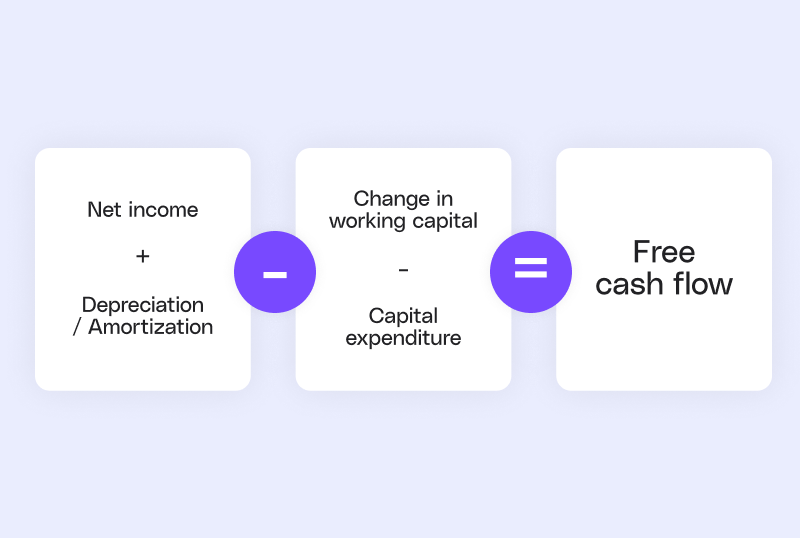
- Capital expenditure: This includes money your business spends on fixed assets, like land, leasehold, or equipment.
- Depreciation and amortization: Many business assets lose value over time. Depreciation refers to tangible assets such as computers, desks, etc. while amortization refers to intangible assets such as domains and trademarks.
- Net income: This is the total income left after deducting business expenses from the total revenue. A good way to calculate this is: sales minus cost of goods sold, general expenses, taxes, and interest.
- Working capital: Working capital is the difference between your assets and liabilities. It represents the capital used in the day-to-day operation of your business.
How to calculate cash flow
There are two different types of cash flow that you’ll need to calculate in order to assess your business’s financial health: free cash flow and operating cash flow.
Free cash flow
This represents the money that remains after paying for things like payroll, rent, and taxes. This is the cash a company can use as it pleases.
Operating cash flow
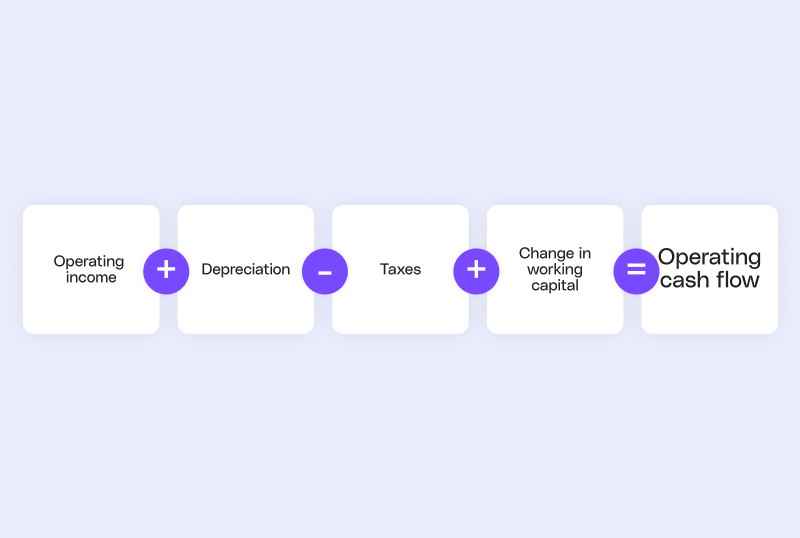
Operating cash flow indicates whether or not a company can generate sufficient positive cash flow to maintain and grow its operations.
How to prepare a cash flow statement
There are several types of financial statements every business should regularly review to understand its health. A cash flow statement is a financial report that shows how much money is moving in and out of your business during a given period. Using this report, you’ll be able to see how much cash is available to your business.
The main components of a cash flow statement are:
- Cash flow from operating activities: This is how much cash is generated from a company’s ongoing operating expenses, such as products or services.
- Cash flow from investing activities: These include any sources and uses of cash from investments made by the company for the company. These include purchases or sales of assets like computers or desks for example.
- Cash flow from financing activities: This represents the sources of cash from investors and banks, as well as the way cash is paid to shareholders.
When creating the cash flow statement, here are the steps you need to take:
- Determine the starting balance of cash at the beginning of the reporting period.
- Calculate cash flow from operating activities.
- Calculate cash flow from investing activities.
- Calculate cash flow from financing activities.
- Determine the closing balance. Take the sum of cash flow from operating, investing, and financing activities to see your change in net cash for a given period.
Forecast expenses and earnings
A cash flow forecast is an estimate of your future sales and expenses. It shows how much money will come in and go out of your business over a particular period. It will also help you understand if you’re going to run out of cash or if you are looking at a cash surplus.
You can use accounting software, like QuickBooks or Xero, to create a cash flow example. You can also use a cash flow app to automate the process and reduce manual errors.
If you aren’t using accounting software, here’s what you need to do:
- Decide on your forecasting period: Choose a reporting timeframe that’s easy to predict and that’s correlated with what you want to know. It can be a week, a month, or a year, whatever you prefer.
- Add up your income: List all the cash coming into your bank account during the forecasting period. This includes sales, tax refunds, interest earned, investments from shareholders or owners, grants, and miscellaneous cash payments.
- Add up your expenses: List everything you’ll need to pay for during the forecasting period. That includes rent, wages, inventory, loans, fees and charges, marketing and advertising, and tax.
- Calculate your cash flow: For each week or month, subtract your total expenses from your total income.
Imagine a restaurant business that also provides catering services, and check out the example of a cash flow statement below. Note that while the first three months of the year are predicted to be slow, last year’s profit and investments keep the business at positive cash flow.
Main reasons for cash flow issues
Different industries have different ways of doing things, and therefore, different reasons that cash flow issues may arise. In this section, we’ll cover some of the main issues that affect most of the small businesses in the US right now.
Inflation
When inflation rises, businesses with variable-rate loans can find themselves making larger installments. Higher loan payments mean that businesses may have predicted a certain cash flow, but are now dealing with less available cash on hand.
Supply chain issues
Supply chain disruptions—whether from labor gaps or price increases across industries—can raise the cost of goods. This means that downstream businesses have less free cash, making it harder to forecast cash flow.
Growing labor expenses
Labor shortages can lead to higher wages and less efficiency. As a result, businesses sometimes fail to deliver products and services to their customers, which can hurt revenue. Meeting those demands comes at a cost: hiring temporary staff or investing in upskilling existing employees.
Inventory management issues
Having too much stock is a problem. The larger your inventory, the less cash you have. Forgotten stock can also lead to cash flow issues down the road. You cannot sell it until you find it, and uncounted stock will continue to burden your cash flow until you do.
What to do when cash flow is negative
There are many reasons your cash flow may be negative but no matter the “why”, we’ll now focus on the “what”. What should you do when you already have a negative cash flow? Keep on reading to find out.
Should I take a loan if my cash flow is negative?
It makes sense that when you lack cash and are wondering how to increase cash flow, the first thing you might think of is taking a loan. And this is definitely one possible solution. However, there are safer steps to take before you resort to that. First, find out why your cash flow is negative. Once you have the answer to that question, the solution will be clearer.
Seek professional advice
Before you make any big decisions, consult a professional expert. An accountant will be able to help you decide how to solve your current issues and how to move forward. Plus, if you do end up taking a loan, an accountant can help you manage the whole process and get the best terms possible.
Cut down your expenses
Reducing expenses is one of the quickest ways to improve cash flow. These simple changes act as cash hacks—tactical shifts that can help you free up working capital quickly. When you spend less on payroll, rent, production, supplies, and other common expenses, the more cash you will have on hand.
This is an immediate step you can take, however, be very careful when cutting down staff. While reducing hires can be a short-term solution, rehiring new employees later may cost more in the long run.
Establish an escalation process
It occasionally happens that a customer drags their feet when paying their invoices. You need a plan for dealing with these uncomfortable situations.
One of the biggest mistakes you can make is waiting too long to communicate and then doing so in an overly aggressive manner. Start early by being friendly, helpful, and seeking to understand (honestly) why your customer is slow to pay.
Get paid by ACH bank transfer
When using Melio to receive business payments, you can get paid directly into your bank account. Instead of dealing with old-fashioned cash or paper checks (which have the highest risk of fraud), you get peace of mind knowing the payment will go where it needs to. You can also track every invoice from the minute it’s generated.
Have a credit policy
A credit policy is a document that sets payment terms for customers. In industries where payment is made in several stages (ie. construction), a credit policy can be as important as insurance.
It’s wise to create incentives for early payments, limit the amount and time for payments on specific accounts, and create a procedure for dealing with delayed payments.
Use contracts
Always work with written contracts. Make sure the payment terms you give clients are shorter than the terms you have with your vendors. Add a clause for price increases of materials and certain delays.
Make sure you pay on time
Late payments often carry late fees. To avoid them, make sure you pay your bills on time. Some vendors even give discounts for early payments.
To make paying on time a regular habit, it is recommended to:
Use an online bill pay tool
With an online bill pay solution, you can reduce the time spent paying the bills and be sure all payments go out right on time.
Things to consider when choosing a bill pay tool:
- Customer interface: You’ll want the ability to just take a photo of an invoice, upload a file, or enter details directly.
- Ability to select a payment method: The ability to pay with ACH bank transfer, debit, or credit card gives you more flexibility.
- Group or split invoices: Can the platform facilitate combining multiple bills into one or splitting bills into installments?
- International payments: Does the platform support payments to foreign countries your vendors work from?
- Workflow capabilities: It should include user roles and permissions.
Looking for an online pay tool? See how Melio compares to alternatives such as Bill and Plastiq.
Pay upfront
Leverage upfront payment to negotiate better prices from vendors. You may save significant costs by paying immediately.
Pay with a credit card
This allows you to defer payments and buy more time. Your vendors get paid on time, while the payment is deducted at the end of your next billing cycle. This tactic is known as credit card float—a way to extend your cash reserves without delaying vendor payments. If your vendors want a check or bank transfer, Melio allows you to pay with a credit card while sending the payment to the vendor in the format they prefer.
Buy now, pay later
Some vendors allow you to buy products now and pay for them later. If this is a common practice in your industry, you may want to take advantage so you can keep more cash on hand.
Cash flow health = your business health
Once you understand your cash flow weak spots, it’ll be easier to figure out how to solve those issues, and how to avoid them. The key is to stay on top of your cash flow status at all times. Once you’ve identified where cash tends to bottleneck, you can put systems in place for how to maximize cash flow and fuel business growth.
With the tips and strategies above, you can turn negative cash flow into positive, and make your business more efficient and resilient.
*This guide is intended for informational purposes only and is not intended as financial advice.
**Melio does not provide legal, tax or accounting advice, and you should consult with a professional advisor before making any financial decisions.

Do W-9 Forms Expire? How Often You Should Update a Vendor's W-9
Learn when a vendor’s W-9 needs refreshing, what changes trigger a new form, and how to stay ready for 1099 season.

5 Ways Nonprofits Can Save Money And Do More Good
Cut costs with simple habits, so your nonprofit can save money and put more toward its mission.

Virtual Accounting Firm: How to Set Up and Run One
Learn how to run your accounting firm remotely and keep your team productive, connected, and growing.