Is ACH Safer Than Wire Payments or Checks?
See which payment method keeps your business safest by comparing ACH, wire, and check fraud risks.


Key takeaways
- Choose ACH for most business payments, because it runs through a regulated network with return rights that give you time to catch fraud.
- Recognize that checks are the most exposed method, since they can be stolen, forged, or altered in the mail.
- Verify that wires are irreversible once collected, so reserve them for large, time-sensitive payments you have confirmed.
- Protect every payment with vigilance, staff training, and a secure payments platform, whatever method you send.
Most businesses experience payment fraud attempts
According to the 2025 AFP Payments Fraud and Control Survey, 79% of organizations experienced payment fraud in 2024. Here is how the attempts broke down by method:
- Checks: 63% of organizations hit, the most-targeted method
- ACH debits: 38%
- Wire transfers: 30%
- ACH credits: 20%
Considering these numbers, business owners should take every precaution to protect their payments. That means choosing a method with the best balance of speed, convenience, cost, and security.
So which payment method offers the best protection, and why?
Are checks safe?
Checks include protection measures that make them harder to tamper with. These features include a security screen, a warning box, a padlock icon, chemical-sensitive paper, fluorescent fibers, erasure protection, and a microprint signature line.
These security features do make life harder for fraudsters. Even so, checks remain exposed to several types of fraud and risk.
Check theft
At the end of the day, checks are physical pieces of paper, so they can be misplaced, lost, or stolen. Forgery is also a huge problem, especially as forgery techniques and tools become more sophisticated.
Thieves do not even have to steal directly from you. They can simply take your mail at any point on its delivery route. According to the same AFP survey, more than 23% of organizations reported payment fraud due to interference with the US Postal Service.
How your banking details get exposed and used in scams
Your banking details, including your account number and routing number, are printed on your checks. That means this sensitive information is out there for anyone to see.
A scammer can use those details in different ways. For example, a demand draft authorizes an individual to withdraw from your checking account without a signature. This is a common scam in payment fraud cases.
What protection do banks offer against check fraud?
Banks offer different services that can increase your check security. Positive Pay is one common example.
Positive Pay automates fraud detection by matching checks presented for payment against a list of checks your business issued. If a check does not match the list, the bank flags it and contacts you to approve the payment. Most banks charge a fee for the service.
Banks are also required to reimburse you if they accept an altered or forged check with your name on it. However, the bank can refuse to compensate you by claiming you did not exercise ordinary care.
The recipient of a stolen or forged check is also exposed to penalties. The bank can refuse to honor the transaction, freeze your account, and even hold you accountable for funds you withdrew.
Why business checks are safer than personal checks
Business checks add a layer to the standard protection of personal checks. They can include anti-copy technology, watermarks, holograms, and thermochromic ink.
Still, business checks are pieces of paper like personal checks. So while they are harder to forge, they can still be misplaced or stolen.
Are wire transfers safe?
Wire transfers are fairly safe, but they carry higher fraud risk because they are fast and irreversible. A wire moves money directly between two banks, usually within the same day. If you want a fuller picture of how safe a wire transfer really is, it helps to compare it against ACH.
Most wire scams bait you into action. Scammers try to convince you to send money on your own, or to give them access to your computer through phishing. They then install malware and extract your online bank account details.
Can wire transfers be canceled?
Wire transfers are almost instantaneous, which makes them hard to stop. That also makes them risky, because your chance of recovering lost funds is very low.
For a remittance transfer (a wire sent abroad), you have up to 30 minutes to cancel it. That only works if the recipient has not yet picked up or deposited the funds.
No such protection exists for domestic wires. Banks usually state in their client agreements that you cannot change or cancel a wire transfer.
Safety tips for wire transfers
Wire transfers are fairly safe, but you can make them even safer with these steps:
- Educate yourself and your employees on common wire scams and safety protocols. Most scams are simple and rely on a false pretense or a fabricated identity.
- Watch for business email compromise (BEC) scams and phishing attempts. A fraudster emails you from a trusted vendor address and asks you to click a malicious link.
- Contact the vendor immediately before clicking any links if you receive an unusual email.
- Use reputable antivirus and malware software, and keep it up to date.
When to use each method
Choose between ACH, wire, and checks by weighing four factors: speed, convenience, cost, and security. The right choice also depends on the type of payment, the recipient, and the amount.
Timing matters too, so it helps to know how long it takes to send an ACH payment before you pick a method. Here are the use cases for each method, so you can decide for each transaction.
Use ACH for
ACH payments are fast, convenient, and cheaper than checks or wires. Those are just a few of the benefits of ACH for a small business. They are commonly used for:
- Payroll: Periodic payments for employee salaries
- Vendor payments: Payments for suppliers and contractors
- Recurring payments: Ongoing vendor, membership, or subscription payments
- Utilities and rent: Regular business expense payments
- Tax payments: Federal, state, and local tax obligations
- Loan payments: Recurring repayments for business loans
Use wire transfers for
Wire transfers are relatively fast, especially between accounts at the same financial institution. They are especially useful for high-value payments, including:
- Large transactions: Move significant amounts of money quickly and securely
- International payments: A good option for sending funds overseas to vendors or partners
- Real estate transactions: Large payments for property purchases or investments
- Vendor payments: For large or international payments, or suppliers who require immediate confirmation of funds
Use checks for
Checks are the least secure, slowest, and most expensive method. Even so, they can be a good choice in certain cases, such as:
- Vendor payments: Suppliers who prefer traditional check payments
- One-time payments: An infrequent or irregular expense
- Non-urgent payments: When the funds are not needed right away
- Face-to-face payments: When the payee can take the check immediately, so you avoid the mail
- Rent: Landlords who prefer checks
- Gifts and donations: A simple way to send contributions or gifts to organizations
Is ACH safer than wire and check?
Yes, ACH is generally safer than wire transfers and checks for most B2B payments. ACH runs through a regulated clearing house with return rights, while wires are irreversible and checks are the most exposed to theft and forgery.
ACH is also growing fast. In 2024, the ACH Network processed 33.6 billion payments valued at $86.2 trillion.
ACH is a secure way to pay because Nacha oversight and return rights give you time to catch fraud or errors, protection a wire cannot offer. ACH is regulated by the federal government and managed by Nacha, which supervises the network.
If fraud does happen, wires leave you far more exposed than ACH. A wire gives you only a brief window to stop it and becomes irreversible once the recipient collects the funds. Wire transfers were also the payment type most targeted by business email compromise (BEC) in 2024.
ACH gives you more room to respond. For consumer accounts, Nacha rules allow up to 60 days to return an unauthorized or erroneous ACH debit, though the window for business accounts is much shorter.
Keep in mind that ACH, like any EFT, is still open to phishing scams. Be careful with your information and stay alert for possible scam attempts.
Whatever method you choose, your first and best line of defense is knowledge and vigilance.
Safety tips for all payment methods
Protect every payment you send with these habits, whatever method you use:
- Verify payment and recipient details. Always double-check the payee before processing. With ACH, you can use ACH Positive Pay to approve set vendors and maximum amounts.
- Monitor accounts payable regularly. Track payments to detect unauthorized activity, and review statements and transaction histories often.
- Educate employees. Train staff to recognize phishing attacks and other attempts to trick them into giving up payment data.
- Update security protocols. Review and update your measures often to protect against new threats and to learn from mistakes.
- Use a secure payments platform. A platform like Melio provides built-in security and safe ACH payments, so you stay one step ahead of fraudsters.
Melio also makes it easier to track and monitor payments, so you can catch and prevent fraud and errors early. You can pay vendors by ACH, wire, or check, and manage all of it in one place.
Ready to make your accounts payable smoother, safer, and more in control? Start with Melio and see the difference.
ACH, wire, and check payment safety FAQs
Is it better to use ACH or a wire transfer?
For most everyday business payments, ACH is the safer, cheaper choice because it can be returned if something goes wrong. Choose a wire when you need money to arrive the same day or you are sending a large, time-sensitive payment.
Is there a downside to ACH payments?
ACH is not instant, so it can take one to a few business days to clear. It also works only within the United States, so it is not an option for most international payments.
What happens if you send a wire transfer over $10,000?
Large wires still go through, but your bank reports transactions over $10,000 to comply with federal rules. Expect possible extra verification steps to confirm the payment is legitimate.
*This guide is intended for informational purposes only and is not intended as financial advice.
**Melio does not provide legal, tax or accounting advice, and you should consult with a professional advisor before making any financial decisions.

The biggest mistake I made when launching my business
The best advice anyone starting their own business can get is: don’t wait until tax season comes knocking to hire an accountant.
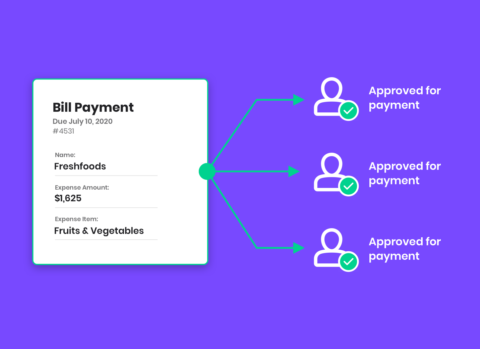
Payment Approval Workflows: A Small Business Guide
Set up payment approval workflows to control spending, pay on time, and cut errors as your small business grows.

What Is PCI Compliance And Why Is It Important For Your Business?
Learn what PCI compliance means, who needs it, and how to keep your business card payments secure.