What Is PCI Compliance And Why Is It Important For Your Business?
Learn what PCI compliance means, who needs it, and how to keep your business card payments secure.


- Key takeaways
- What is PCI compliance?
- Who needs to be PCI compliant?
- Who mandates and enforces PCI compliance?
- Is PCI compliance required by law?
- What happens if a business is not PCI compliant?
- The 4 levels of PCI compliance
- The 12 PCI DSS requirements
- How to become PCI compliant
- How Melio keeps your payments secure
- Keep your business payments secure
- PCI compliance FAQs
Key takeaways
- Confirm any tool that handles your card data is PCI compliant before you rely on it.
- Recognize that PCI DSS sets 12 requirements across six goals to protect cardholder data.
- Match your compliance level to your yearly card transaction volume, from Level 1 to Level 4.
- Choose payment partners like Melio that stay PCI compliant so your data stays protected.
What is PCI compliance?
PCI compliance means following the Payment Card Industry Data Security Standard (PCI DSS), a set of 12 security requirements that protect cardholder data. Any business that accepts, stores, or transmits card data must meet it.
Businesses that handle card data need to protect it from breaches, identity theft, and fraud. Staying compliant is how you keep that data safe and earn customer trust.
What is PCI DSS?
PCI DSS is the global standard that tells businesses how to secure cardholder data. It groups its rules into six goals and 12 requirements.
You can read the full standard in the PCI DSS standard.
Who needs to be PCI compliant?
Any business that accepts, stores, or transmits cardholder data must be PCI compliant. This applies no matter how you receive payments.
Say you own a coffee shop and use a digital B2B payments service to pay your vendor, Calvin’s Coffee Beans. If you pay by card, the platform and its third-party card processors must be PCI compliant.
Who mandates and enforces PCI compliance?
The PCI Security Standards Council (PCI SSC), made up of five major card companies, sets the rules. The PCI SSC oversees PCI compliance and improves card-transaction security.
It also gives businesses resources to help them comply. These include self-assessment questionnaires (SAQ) to validate compliance and lists of Qualified Security Assessors (QSAs), Payment Application QSAs (PA-QSAs), and Approved Scanning Vendors (ASVs). The council also offers education for Internal Security Assessors (ISAs).
The PCI SSC updates the requirements from time to time. The most recent version, PCI DSS v4.0.1, was published in June 2024, and its requirements became mandatory on March 31, 2025.
Is PCI compliance required by law?
No, PCI compliance is not required by law. PCI DSS is a security standard, and the government does not enforce it.
Even so, non-compliant businesses can face penalties and fines. These are built into contracts between merchants, payment processors, and card brands.
What happens if a business is not PCI compliant?
Working with a non-compliant tool puts sensitive card data at risk. It also exposes your business to sanctions from the major card brands.
The simplest way to protect yourself is to choose compliant partners for every payment you make.
The 4 levels of PCI compliance
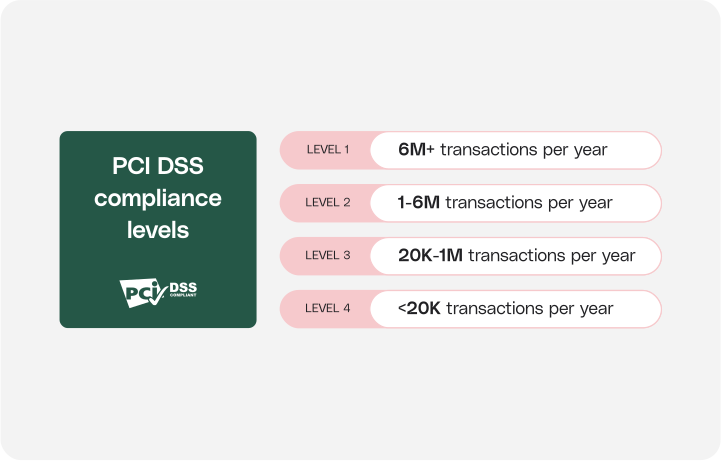
PCI compliance has four levels, set by how many card transactions a business handles each year. Level 1 is the highest-volume tier, and Level 4 is the lowest.
Level 1 merchants need an annual onsite audit by a qualified security assessor (QSA) or internal security assessor. That assessor reviews the requirements against their findings for an annual report on compliance.
Levels 2, 3, and 4 can comply by completing the SAQ and meeting the matching requirements. Many companies, including Melio, use merchant banks and third-party services that handle much of the compliance work. Even so, the business is still responsible for making sure its partners are compliant.
The 12 PCI DSS requirements
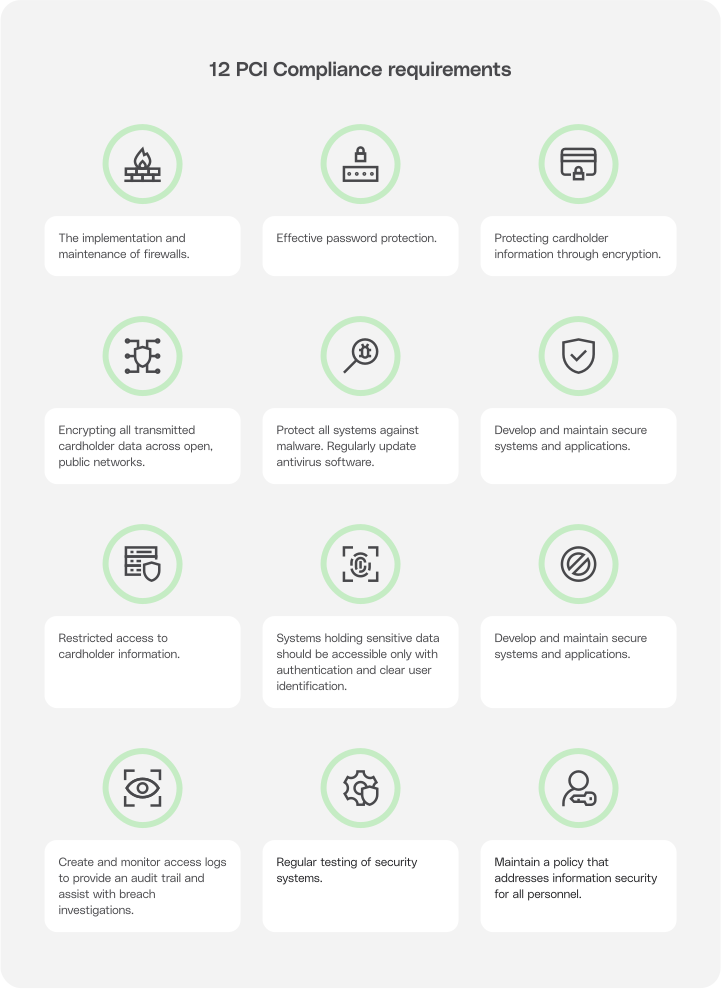
PCI DSS groups its rules into six goals and 12 requirements. The six goals are:
- Build and maintain a secure network
- Protect cardholder data
- Maintain a vulnerability management program
- Implement strong access control measures
- Regularly monitor and test networks
- Maintain an information security policy
These six goals expand into the 12 requirements shown below.
How to become PCI compliant
Even small businesses that accept card payments use a third-party processor, so you usually don’t need to become compliant yourself. Still, here is how organizations do it, from finding your level to ongoing monitoring:
- Determine your PCI level by finding the number of transactions you process annually. Each of the five card brands (American Express, Discover, JCB, Mastercard, and Visa) sets its own thresholds, and the goal is to meet all of them.
- Map the flow of cardholder data, including the applications, systems, and people who handle card data, plus all payment platforms and storage systems. This is usually done with help from your IT team.
- Fill out the Self-Assessment Questionnaire (SAQ), which validates whether your business meets each of the 12 requirements. Level 1 businesses need a PCI-approved auditor.
- Fill out the Attestation of Compliance (AOC), which differs by compliance level and confirms every step is met.
- Conduct a vulnerability scan using approved scanning vendors (ASVs) to find and fix security gaps.
- Submit your documents, including the AOC, SAQ, and ASV reports, to banks and card companies.
- Monitor your compliance year-round, since infrastructure and data change over time, with a team ready to respond to threats.
How Melio keeps your payments secure
At Melio, being safe and secure is our priority. Melio is fully PCI DSS compliant and uses a Level 1 certified card processor, the highest tier.
That means your card details stay protected and are never stored on our servers. Melio and its processor test the system daily, both manually and automatically.
You can find more in our security details and help center.
Keep your business payments secure
The safest approach is to work with providers that follow PCI compliance. With a tool like Melio, your sensitive information stays secure and payments stay stress-free.
Security is a top priority at Melio, so you can focus on running your business.
PCI compliance FAQs
Can I handle PCI compliance myself?
Smaller merchants often can, using the SAQ and a vulnerability scan. Larger, high-volume businesses usually need a qualified security assessor.
How do I know if a company is PCI compliant?
Look for a security section on its website that names its PCI level. Compliant providers can share an attestation of compliance (AOC).
Do small businesses need to worry about PCI compliance?
Yes, any business that handles card data must comply. Using a compliant payment partner makes it far easier.

4 Ways Every Small Business Can Simplify Invoice Processing
Simplify invoice processing and pay vendors on time with a few practical digital habits.

Is ACH Safer Than Wire Payments or Checks?
See which payment method keeps your business safest by comparing ACH, wire, and check fraud risks.

5 Ways To Strengthen Your Relationships with B2B Customers
Learn five simple ways to strengthen your B2B customer relationships and turn buyers into loyal ones.