How to Reduce Business Expenses: A Small Business Guide
Start acting like a startup, keep your business lean, and hold on to more of the money you earn.


- Key takeaways
- How to become leaner in your business
- Start by tracking and reviewing your spending
- Ways to reduce fixed expenses
- Ways to reduce variable expenses
- Negotiate with vendors and suppliers
- Have your vendors own your inventory
- Use technology to automate payments and cut costs
- Cut waste
- Keep your business lean for the long run
- Reducing business expenses FAQs
Key takeaways
- Track your spending before you cut, sorting costs into fixed and variable so you know what to trim first.
- Renegotiate fixed costs like rent, leases, and insurance, since these bills quietly climb over time.
- Reduce variable costs by buying carefully and letting suppliers hold inventory until you make a sale.
- Automate payments with a tool like Melio to avoid late fees and match spending to your cash flow.
How to become leaner in your business
Review every recurring bill. A monthly charge you set years ago has probably crept up since you signed on. Companies know you get busy, so they raise prices slowly, especially on long-term customers. Your insurance has likely climbed too.
Next, recognize you have two types of expenses to tackle:
- Fixed expenses you pay every month, week, or year, no matter how much you sell.
- Variable expenses that change with demand for your products or services.
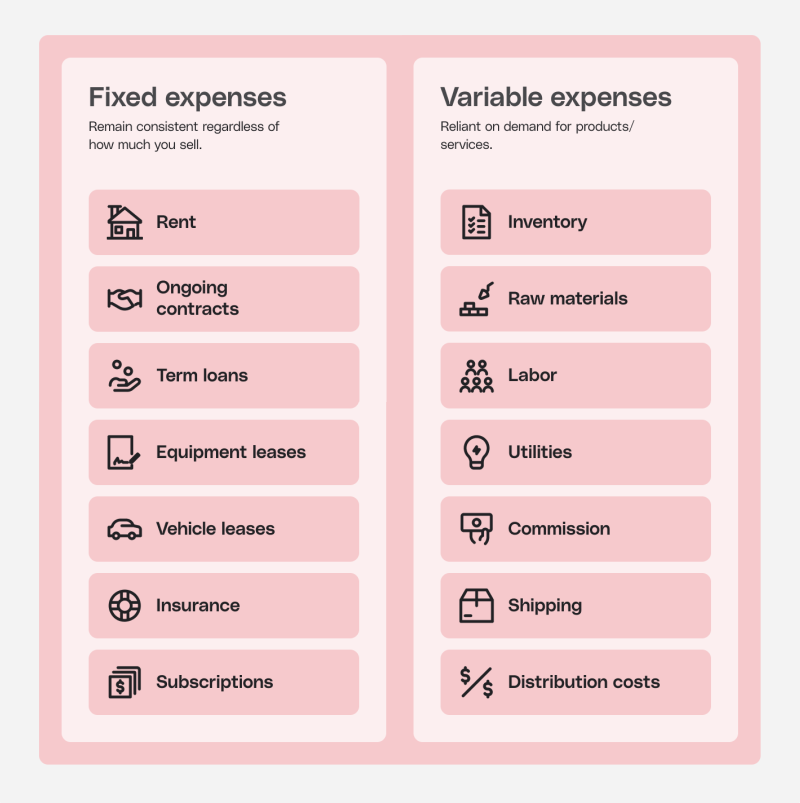
Let’s look at some ways to reduce both types of expenses.
Start by tracking and reviewing your spending
Before you cut anything, know exactly where your money goes. A clear picture of your spending shows you which costs are worth keeping and which ones you can trim today.
- List every recurring charge, from rent and software to bank fees.
- Sort each cost into fixed or variable.
- Flag the biggest costs and the ones you can change the fastest.
Review this list every few months. Prices creep up quietly, so a regular check keeps small charges from turning into big ones.
Ways to reduce fixed expenses
Fixed expenses are costs you pay no matter how much you sell. Examples include rent, ongoing contracts, term loans, equipment and vehicle leases, and insurance. They make it harder to respond when conditions change. So how do you deal with them?
Rent
- Negotiate hard. In addition to trying to get the lowest cost, make the lease as short as possible, have provisions allowing you to sublease.
- Use rent-as-you-go space. Small businesses now have more choices of temporary work spaces: offices with desks, rental kitchens, and other short-term, rent-by-the-day or hour types of spaces.
- Renegotiate your lease. If rent becomes a hardship, talk to your property manager to see if they’ll work with you to lower your monthly rent, delay payments, or otherwise help you stay in business.
Term loans, equipment, and vehicle leases
- Review the fine print on current leases. Interest rates have eased from their recent highs, with the federal funds rate holding at 3.50% to 3.75% in mid-2026, so check whether extending, refinancing, or renegotiating a lease could lower your monthly costs.
- Negotiate with your vendors. Everything is negotiable. Don’t be afraid to see if you can get lower rates or better terms than originally offered.
- Look for sources with lower interest rates: Can you take a loan from a different source with lower costs, such as SBA loans or a line of credit that would enable you to pay off higher interest-rate fixed expenses with a lower-cost option?
Ways to reduce variable expenses
Variable expenses rise and fall with demand. They include inventory, raw materials, and staff. They sound easy to cut, but reducing them takes planning. You need inventory to sell, staff to deliver, and materials to make your products.
But how do you reduce costs on variable expenses?
- Choose vendors based on more than price. Look for their ability to fill orders fast, more generous payment terms (such as more time to pay your bills), reliability, and the option for you to pay with credit cards if you need to.
-
Purchase carefully. Examine past sales records and forecast sales conservatively. It may be better to lose a sale than to spend too much on inventory, raw materials, or supplies.
-
Seek out vendors with the fastest turnaround times. That means you can order closer to when you actually need to use a product—and you can make changes in your purchasing patterns based on more real-time demands.
-
Seek out local vendors. If a vendor is closer to you—geographically—it means faster shipping times (and typically, lower shipping costs).
-
Ask for good customer discounts. Most companies, especially shipping companies, have discounts for larger customers. Ask them to provide you with those rates, even though you are a small business.
- Encourage customers to pre-order. The longer in advance that you know what a customer wants, the more time you have to get the materials, inventory, or supplies you need. Providing a discount to customers as an incentive for pre-orders, especially pre-paid orders, helps you significantly reduce the inventory you need on hand and may more than offset the lower price you charge.
Negotiate with vendors and suppliers
Almost everything is negotiable, and your vendors would rather keep your business than lose it. A short, friendly conversation can lower your costs more than you expect.
- Ask for better pricing, longer payment terms, or a loyalty discount.
- Compare quotes from other suppliers before you renew.
- Bundle services with one vendor to earn a lower rate.
Come prepared with what you spend and what you need. Vendors respect a customer who knows the numbers.
Have your vendors own your inventory
The best way to cut inventory costs is to hold no inventory until you make a sale. Remember my print-to-order books? I own no physical books until an order comes in.
Of course, not every business can manufacture a product so quickly. But there are now many companies that enable small businesses to not actually own their products until sold.
Jeff Bezos started the largest bookstore in the world exactly that way. Bezos didn’t have to own a single book when he first launched Amazon. He identified book distributors with huge inventories that could fulfill individual orders for him quickly. He was able to spend his money on building an online bookstore without having to spend his funds on actual books.
You’ve now probably seen thousands of online stores doing exactly what Bezos did at first. They create an attractive web storefront that sells products, but the order goes to a third party that owns the inventory, fulfills the order, and in some cases, even uses packaging with the name of the reseller.
Of course, you don’t make as much money on each sale doing this as you would if you maintained the inventory yourself. But you have far less financial risk.
You don’t have to do this only with a web storefront. Whatever line of business you are in, investigate if there are suppliers who will quickly fill orders for you when you have an order.
Seek out distributors and wholesalers who will do direct fulfillment of their inventory for you and bill you as products are shipped.
Use technology to automate payments and cut costs
The right tools save you time, and time is money. Automating routine tasks cuts errors and frees you to focus on the work that grows your business.
- Automate bill payments so you never miss a due date or pay a late fee.
- Schedule payments to match your cash flow instead of paying everything at once.
- Sync your payments with your accounting software to skip manual data entry.
A platform like Melio lets you pay vendors your way, keep more cash on hand, and manage bills in one place.
Cut waste
Cutting waste means paying only for what you actually use. Whenever you see waste, you are looking at money that went out the door for nothing.
- Excess inventory or raw materials
- Extra packaging on products and deliveries
- Lights and heat left on in empty rooms
Make sure everyone who works with you knows that cutting waste is a priority. Examine every part of your business to use fewer resources and spend less.
Keep your business lean for the long run
Cutting costs is not a one-time project. It is a habit that keeps your business flexible and ready for whatever comes next.
Still, be careful not to cut too deep. Trimming a cost that helps you win customers or keep good people can hurt more than it saves. Focus on waste first, then weigh every other cut against the value it brings.
Ready to keep more of your money and pay bills on your terms? Sign up for Melio.
Reducing business expenses FAQs
What is the 50/30/20 rule in business?
The 50/30/20 rule splits your income into three buckets: 50% for needs, 30% for wants, and 20% for savings or debt. Some owners borrow it as a simple way to balance spending against goals.
Can you write off 100% of business expenses?
Not always. Many ordinary business costs are fully deductible, but some, like meals or personal-use items, are only partly deductible. Check with a tax professional to confirm what applies to you. See the IRS rules for deducting meal and travel expenses for details.
What is the fastest way for a small business to cut costs?
Start with recurring charges you no longer use, such as unused software subscriptions. Canceling or downgrading them lowers your costs right away with no effect on your work.
How do you cut costs without hurting your business?
Focus on waste and duplicate spending first. Protect the costs that bring in customers or keep good employees, and weigh every cut against the value it delivers.
*This blog post is intended for informational purposes only and is not intended as financial advice.
**Melio does not provide legal, tax or accounting advice, and you should consult with a professional advisor before making any financial decisions.
Accounts Receivable Automation: How to Sync Your Books With Accounting Software
See how syncing your receivables with your accounting software saves time and keeps your books accurate.

ACH Limit Guide: All You Need to Know In 2026
Learn how ACH limits work, what your bank caps, and how to raise them for your business.

Vendor Onboarding Best Practices for Small Businesses
See how a simple vendor onboarding process helps you vet, set up, and pay new vendors with ease.