Business Credit Card Requirements And How You Can Qualify
Get the business credit card you need by knowing how to qualify and how to boost your approval odds.


- Key takeaways
- What is a business credit card?
- Why a business credit card matters for your business
- Factors to consider when choosing a business credit card
- Business credit card requirements: what you need to qualify
- Types of business credit cards
- Tips for improving your eligibility
- How personal credit affects business credit card approval
- Simplify credit card payments and credit building (even when vendors prefer other payment forms)
- Business credit card requirements FAQs
Key takeaways
- Confirm your personal FICO score is around 670 before you apply.
- Gather your business name, address, and EIN or SSN ahead of time.
- Choose a card that fits your credit, including a secured card if your score is low.
- Improve your odds by paying bills on time and keeping credit utilization under 30%.
What is a business credit card?
A business credit card is a card tied to your business bank account and used only for business expenses. It works much like a personal card, letting you make purchases and track spending.
And yes, you need a separate bank account for your business. It simplifies bookkeeping and, in certain business types and legal situations, helps protect your personal assets.
But are business credit cards worth it? Let’s explore.
Why a business credit card matters for your business
A business credit card keeps your business spending separate and helps you build business credit. Just like a separate business account, it’s important to pay your business bills with a credit card that’s dedicated to business expenses. Some of the benefits include:
- Higher spending limits, because businesses sometimes require a higher credit than individuals.
- Bigger and more relevant rewards. Besides the usual consumer rewards, like travel, you can get rewards for business-related expenses, like advertising.
- Complimentary credit cards for employees, with the option to set and track their spending.
Factors to consider when choosing a business credit card
The right business credit card depends on your spending needs, credit history, fees, and interest rate. Take these factors into consideration before signing up to one of them.
Your business needs
A few of the factors to take into account include:
- How much financial room do you need? First, look at whether the card’s credit limits align with what you need. If you plan to expand or invest in growth and know you’ll need a loan, see how the card can help you build credit for better loan terms later.
- How about employee and financial management? If you need to provide credit cards to your employees, can your card issuer simplify this process? How much control does it give you in terms of setting, managing and analyzing their expenses?
- How can you save on your biggest upcoming or most recurring expenses? Compare credit card rewards to choose the one that’ll save you the most money. On that note, remember to also compare card fees.
Credit history
Both your personal and business credit score matter here. Let’s explore this.
- Personal credit score: A good personal credit score makes it easier to get a business credit card. If yours is low, improve it first by reducing your credit utilization rate. Strive to spend less than 30% of your total credit limit. A business credit card helps here too, since you’ll pay business expenses with a separate card.
- Business credit score: Similarly, your business credit score can impact your ability to get insurance or loans at decent rates. It can also impact your personal score. Choose a card that supports you in building your score, like one with financial management features.
Annual fees
Annual fees vary widely depending on the card type. Some issuers give you a fee-free first year, but think long term and compare what happens after that year.
For example, one issuer might charge no fees the first year. If it then charges twice as much as another issuer, it’ll cost you the same by the end of the second year, and more by the end of the third.
Interest rates
The average business credit card interest rate is around 21%, but it depends on your credit score. If your score is low, it can climb into the low 30s. The more you improve your score, the better interest rate you’ll be able to get.
Business credit card requirements: what you need to qualify
To qualify for a business credit card, you generally need an eligible business type, solid personal credit, proof of income, and a few key documents. Here is a quick checklist:
- Business type: sole proprietor, LLC, partnership, corporation, or nonprofit.
- Credit score: a personal FICO score of around 670 or higher.
- Income: proof of business or personal income.
- Documents: your EIN or SSN, plus your business name and address.
Your business type
You can apply for a business credit card with a variety of business structures, including small business, freelancing, LLC, partnership, corporation and nonprofit.
Credit score you need
You typically need a personal FICO score of around 670, considered “good,” to qualify for most business credit cards. Without an existing business card, issuers base the decision on your personal credit score.
The top tier runs from 800 to 850, and the higher your score, the better the rates and terms you can qualify for.
Your overall income
You don’t necessarily need a high income to get a business credit card. Banks do look at your income to understand how much risk they’re taking on.
Documents and business details to prepare
Before you apply, gather a few basics so the process goes smoothly. Having these ready helps issuers verify your business and speeds up approval.
- Your business name, address, and contact details
- Your EIN or, if you are a sole proprietor, your SSN
- Your business type and how long you have been operating
- An estimate of your annual business revenue
Types of business credit cards
Business credit cards come in several types, from prepaid and charge cards to secured and unsecured options. Here are the key options:
- Prepaid business cards: Business owners can add money to a credit card in advance, and only this sum can be used for purchases.
- Charge cards: You pay the balance in full each time, so there are less fees.
- Rewards or cash back cards: Credit cards that put a bigger emphasis on letting you accumulate rewards, or flat out give you money back, the more you buy.
- Secured business credit cards: Meant for businesses with no, or low, credit score. You make a deposit, whose amount impacts how much credit you get. Deposits typically range from $200 to $5,000.
- Unsecured business credit cards: Regular credit card, like a consumer one, where your credit limits are influenced by your credit history and revenue, among other factors.
- No personal guarantee (PG) business credit cards: A card that only requires your Employer Identification Number (EIN) instead of your social security number (SSN), so you’re not personally liable for paying (or not paying) the credit card’s balance. Instead, your business entity is. Unfortunately, no PG cards are usually not a small business card, but rather meant for large companies.
Tips for improving your eligibility
Improve your approval odds with these steps:
- Open a business account. Make it the account where customers transfer payments, and the one you pay your expenses out of. This shows you have a working business and helps you build business credit.
- Start with an easier card first. If you can’t get the card you want, get another from the list above. Make payments on time to prove you manage money well, then apply again to the one you want.
- Keep credit utilization under 30%. Pay all your bills on time and work to reduce your debt. Look for ways to lower your credit utilization rate, keeping it under 30%. For example, if your overall credit across all cards is $21,000, 30% is $6,300, so try to keep expenses under $6,300.
- Step up your cash flow. Cash flow is the money moving in and out of your account. Aim to keep more in your account than you plan to spend, so you can cover bills and unexpected costs. Build it by reducing expenses and increasing revenue, and consider a cash flow management app to help.
- Use debt to your benefit. If you need a loan, make it as small as possible and pay it on time. It turns something that looks negative, needing to borrow, into proof you can be trusted to pay on time.
How personal credit affects business credit card approval
Your personal credit score has a significant impact on business credit card eligibility and conditions. When you set out to get your first business credit card, all issuers have to assess their risk is your personal credit history.
Your personal credit could impact the type of business card you can get, if you can get one at all, and your interest rates. The better your personal score, the better the terms your small business can obtain.
Simplify credit card payments and credit building (even when vendors prefer other payment forms)
One of the ways to build your credit score is to use your credit card responsibly. However, to use it at all, you need vendors and contractors that accept credit cards, and not everyone does.
This is where managing a credit card for B2B needs gets complicated for some. Instead of worrying about it, use a platform like Melio, where you pay via credit card and get rewards, but your vendors get the money whichever way they want, instantly, by single-use virtual card, by bank transfer or by check. Ready to simplify how you pay? Sign up for Melio and set your business up for success.
Business credit card requirements FAQs
Is it hard to get a business credit card with an LLC?
No. An LLC can make approval easier because it separates your business identity. Issuers still review your personal credit for a first card.
Can I use my EIN to get a business credit card?
Sometimes. A few no-personal-guarantee cards accept an EIN alone, but most business cards still ask for your SSN.
Is it hard to get approved for a business credit card?
Not usually if you have good personal credit and steady income. Approval gets easier as your business credit grows.
Can I get a business credit card with a 500 credit score?
It is tough with a 500 score. A secured business card is often the most realistic way to start building credit toward approval.
This content is for informational purposes only and should not be considered financial, legal, tax, or accounting advice. Melio does not provide professional advisory services. Always consult a qualified professional before making financial or business decisions.

EFT vs ACH Payments: Differences, Costs, and When You Should Use Each
Learn how EFT and ACH payments differ so you can pick the right way to pay and get paid.

How to Pay Freelancers Faster: Methods, Speed, Steps
Learn how to pay freelancers quickly and fairly, so every project payment lands on time.
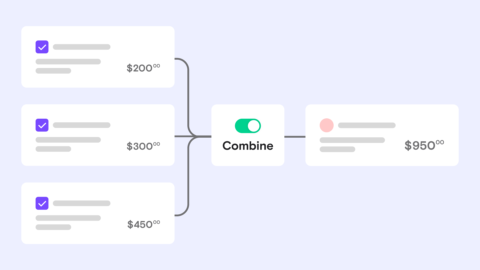
One Vendor, Multiple Bills? Pay Them All In One Go With Batch Payments!
Combine multiple bills to the same vendor into one batch payment, and save time on every pay run.