Surviving Tax Season: A Small Business Guide to Filing and Deadlines
Prepare for tax season with confidence and file your small business taxes correctly and on time.


Key takeaways
- Gather every income and expense record before you file so your return is accurate and complete.
- Identify which of the five federal tax types apply to your business, then file the form that matches your structure.
- Mark your deadlines early, since partnerships and S corporations file by March 15 and C corporations and sole proprietors file by April 15.
- Use accounting and bill pay tools year-round to stay organized and make tax season far easier.
Step 1: Collect your records
Before filling out your tax forms, you should have all of your records in front of you. These records include both incoming and outgoing payments made by your business. This is much easier if you work with an online spreadsheet or software.
Types of small business taxes
You always need to report all your income to the IRS, and it is also important to know which form to fill out. The type of business you register as, such as an LLC, S corp, or sole proprietor, tells you which tax form to file.
Keep in mind there are federal taxes, collected by the federal government, and state taxes, collected by the states where you live and earn income. In this guide, we focus on the federal tax requirements only.
Below are the five general types of federal taxes.
Income tax
All businesses have to file an annual income tax return and pay federal taxes on any income earned during the year. Two types of businesses have different requirements:
- If your business is a partnership, each partner reports their share of the profit or losses on their individual tax return. A partnership does not pay tax on its income but passes through any profits or losses to its partners.
- Sole proprietors, meaning businesses operated by one person, use one form to report both personal and business income.
Self-employment tax
This is made up of Social Security and Medicare taxes for individuals who work for themselves.
Employer tax
If you have employees, there are federal tax requirements for what you must pay and the forms you have to file. Generally, employers must report wages, tips, and other compensation paid to employees.
Excise tax
Excise tax applies to specific goods and services, including:
- Fuel
- Airline tickets
- Heavy trucks and highway tractors
- Indoor tanning
- Tires and tobacco
Businesses in industries that pay excise tax generally pass it on to consumers through higher prices.
Estimated tax
Freelancers, independent contractors, and small business owners who expect to owe at least $1,000 in taxes need to estimate and pay quarterly taxes, typically on the 15th of April, June, September, and January of the following year.
Fill out the right tax forms
Many small businesses are registered as sole proprietorships. In this case, there is no separation between you and your business. You are entitled to all of the profits and hold responsibility for its losses and liabilities.
If you are registered as a sole proprietorship, you report business income and expenses along with your personal income tax return (Form 1040) on a Schedule C attachment.
Otherwise, you prepare a separate tax return. C corporations file Form 1120 and S corporations file Form 1120-S. Multi-member LLCs are considered partnerships and typically file Form 1065.
This can feel confusing, but you are not alone. To be sure you file the right forms, it helps to hire an accountant during this important time of year.
Small business tax deadlines
Knowing your deadlines helps you file on time and skip late penalties. Your due date depends on how your business is set up.
Partnerships, multi-member LLCs, and S corporations file by March 15. C corporations and sole proprietors file by April 15. If a deadline lands on a weekend or holiday, it moves to the next business day.
If you expect to owe tax during the year, you may also owe quarterly estimated payments. These are due in April, June, September, and January.
Small business tax deductions and credits
Deductions and credits lower what you owe, so it pays to track them all year. A deduction reduces your taxable income, while a credit reduces your tax bill directly.
Common small business deductions include home office costs, business travel, supplies, software, and a share of your vehicle use. Keep receipts and records so you can back up every claim.
When you are not sure whether something qualifies, ask a tax professional. The right guidance can save you more than it costs.
How to better prepare for tax season
Staying ready year-round keeps tax season calm. These three habits help you file accurately and on time.
Stay organized all year long
Running a business is a 24/7 operation, and keeping your books in order takes time. Still, organized records are essential to your financial health. An orderly back office makes tax season far easier.
The easiest way to do this is with online tools. Digital accounting software helps you stay organized and track all your transactions during the year. Use software that works with your accounts payable tool, so your books align automatically when you pay and accept payments.
Keeping your books in order all year gives you accurate records of your business income and expenses. That makes filing a return and paying the right amount of tax a lot easier.
Pay attention to deadlines
Filing deadlines depend on your business type. Partnerships, multi-member LLCs, and S corporations file by March 15. C corporations and sole proprietors file by April 15. If those deadlines fall on a weekend or holiday, the deadline shifts to the next business day.
Use digital tools
The average cost of having an accountant prepare a small business tax return ranges from about $500 to $2,500, depending on your business structure and complexity.
Several digital tools help you keep track of your business expenses. These include QuickBooks, which lets businesses categorize expenses and track estimated taxes due, among other features. It also syncs seamlessly with Melio.
If you already use Melio to make payments, you can categorize your expenses and export a CSV of the details you need for your annual 1099 forms, straight from your dashboard.
Get ready to stay ready
Taxes are not the most enjoyable part of owning a business, but these strategies help you reduce tax-related hassles and unexpected surprises come April. Discover your own habits too, and build a routine that works for you.
Sign up for Melio to pay your bills and organize your expenses in one place, so your books stay ready for tax season.
Small business taxes FAQs
How much does a small business need to make to pay taxes?
If you are self-employed and earn $400 or more in net income, you generally need to file and pay self-employment tax. Income tax may apply at lower thresholds depending on your situation.
Do I have to file taxes if I made less than $5,000 self-employed?
Yes, in most cases. Once your net self-employment income reaches $400, you usually need to file a return and pay self-employment tax, even if the amount is small.
What taxes do you pay on an LLC?
Most LLCs are pass-through entities, so profits flow to the owners, who report them on their personal returns. Owners typically pay income tax and self-employment tax, and an LLC can elect to be taxed as a corporation.
*This blog post is intended for informational purposes only and is not intended as financial advice.
**Melio does not provide legal, tax or accounting advice, and you should consult with a professional advisor before making any financial decisions.

Online Payments: A Simple Guide For Your Business
Learn how to pay bills and get paid online so your business saves time and stays in control.
One Vendor, Multiple Bills? Pay Them All In One Go With Batch Payments!
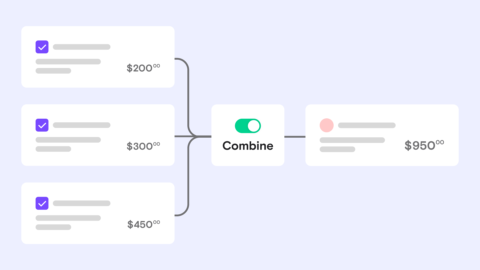
Combine multiple bills to the same vendor into one batch payment, and save time on every pay run.

5 Reasons Why Your Vendors Will Benefit From Online Bill Management
Discover how online bill management helps your vendors get paid faster, safer, and with less hassle.