How to Send International Wire Transfers Without Overpaying: A Small Business Guide
Pay overseas vendors for less and stop overpaying on international wire transfer fees.


- Key takeaways
- What fees do international wire transfers charge?
- How much do international wire transfers cost at major banks?
- How does an international wire transfer work?
- How to reduce international wire transfer costs
- When should you use a wire transfer or international ACH?
- Simplify international payments with Melio
- Iinternational wire transfer fees FAQs
Key takeaways
-
International wire fees stack up from bank charges, intermediary and correspondent fees, and exchange rate markups.
-
Sending in the recipient’s local currency and paying online usually costs less than sending US dollars from a branch.
-
US rules require providers to disclose fees and the exchange rate before you send, so always review them.
-
For small or non-urgent payments, an international ACH often beats a wire on cost.
What fees do international wire transfers charge?
International wire transfer fees are the combined costs of a bank’s send fee, intermediary or correspondent bank charges, and any exchange rate markup. Together they can make a transfer cost more than the headline fee suggests. The flat fee your bank shows is only part of the story.
Bank transfer fees
This is the fee your bank charges to send the wire. Many banks also let the recipient’s bank charge a fee to receive it. Outgoing international wires cost more than domestic wires and vary widely from bank to bank. Incoming wires can be free, and some banks also charge a smaller fee to receive one.
Intermediary and correspondent bank fees
An intermediary or correspondent bank is a middle bank that helps move your money when your bank and the recipient’s bank have no direct link. Each bank in that chain can impose its own fee. As a result, your recipient can receive less than the amount you sent.
Exchange rate markups
The mid-market rate is the real, mid-point exchange rate between two currencies. Many banks add a margin on top of it when they convert your money. This markup is often the largest hidden cost, and it grows with the size of your payment.
How much do international wire transfers cost at major banks?
Costs vary by bank, by the currency you send, and by whether you send online or in a branch. Outgoing international wires cost more than domestic wires and vary widely from bank to bank, and some banks waive the fee when you send in a foreign currency or charge less for online transfers than for branch wires. Always confirm the current figure with your own bank.
Separately, US law works in your favor when you compare costs. US providers must disclose the fees and exchange rate before you pay for an international wire, under the CFPB remittance transfer rule. Use that disclosure to compare the total cost across providers.
How does an international wire transfer work?
A wire moves money electronically from one bank to another. Here is the path it takes.
-
You give your bank the recipient’s details, including their bank account number, IBAN, and SWIFT code.
-
Your bank sends the funds through the banking network, often the SWIFT network, and any intermediary banks in the chain.
-
If the currencies differ, the money is converted at the provider’s exchange rate.
-
The recipient’s bank credits the funds to their account once it clears the banking network.
Because wires are hard to reverse, check the recipient’s information carefully before you confirm. In the US, you generally have up to 30 minutes to cancel an international wire, or remittance transfer, before the recipient collects the funds.
How to reduce international wire transfer costs
You have several practical ways to pay less on every transfer.
Send in the recipient’s local currency
Sending in the recipient’s local currency often lowers or waives the outgoing fee. It also avoids stacked conversion costs when your bank changes US dollars into a foreign currency.
Compare providers and exchange rates
Compare the total cost, not just the headline fee. A low fee paired with a poor exchange rate can cost more than a higher fee with a fair rate.
Send online instead of in a branch
Online and in-app wires usually cost less than branch wires. They are also faster to set up once you save a recipient.
Use a dedicated payments platform
A modern payments platform can offer transparent exchange rates, a predictable fee, and coverage across many countries. That mix suits small businesses making recurring vendor payments.
When should you use a wire transfer or international ACH?
A wire is not always the cheapest choice. Use this simple framework.
-
Choose a wire for large, urgent, or US-dollar payments, or when you need to reach a country that other methods cannot.
-
Choose an international ACH for smaller, non-urgent payments. It usually costs less and avoids lifting fees, but it only delivers local currency and reaches fewer countries.
Matching the method to the payment keeps your costs low without slowing anyone down.
Simplify international payments with Melio
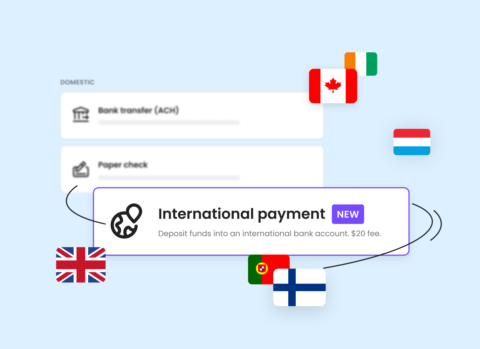
Paying overseas vendors should not mean guessing at fees. With Melio, you can send international payments to 80+ countries in 15 local currencies, with competitive exchange rates and a clear, predictable fee, all from one dashboard that syncs with your accounting tools. Sign up for Melio to pay vendors around the world without overpaying on every transfer.
Iinternational wire transfer fees FAQs
Below are answers to frequently asked questions about international wire transfer fees.
How do I avoid a foreign transaction fee on an international wire?
Send the wire in the recipient’s local currency when you can, and pay online rather than in a branch. Compare the total cost, including the exchange rate markup, across providers.
What happens if I wire more than $10,000 internationally?
Wiring a large amount is legal. To comply with US anti-money-laundering rules, banks and money transmitters keep records of qualifying transfers and may report them to regulators. Keep clear records of the payment and its business purpose.
How much does it cost to wire a large sum such as $100,000?
The flat bank fee is a small share of a large transfer. The exchange rate markup usually matters more, since it scales with the amount.
Are international wire transfers safe for business payments?
Yes, wires are one of the more secure ways to send money abroad. Because they are hard to reverse, verify the recipient’s details and only pay vendors you trust.
This content is for informational purposes only and should not be considered financial, legal, tax, or accounting advice. Melio does not provide professional advisory services. Always consult a qualified professional before making financial or business decisions.

Freight Technology: Tools to Move Your Business Forward
Discover how freight technology, from tracking to digital payments, can push your business forward.

Stop Chasing Receipts: How Real-Time Expense Capture Works
Learn how real-time expense capture ends the receipt scramble and keeps your books ready.
How To Pay Your International Vendors With Melio
Pay your international vendors in USD or local currency, all from the same place you pay every bill.