How to Build a Marketing Plan for Your Small Business
Learn how to build a marketing plan that helps your small business attract customers and grow.


Key takeaways
-
Start with research to understand your customers, competitors, and market before you spend a cent.
-
Set clear, measurable goals with deadlines so you can track whether your plan works.
-
Use low-cost tactics like a simple website, social media, and loyalty perks to reach customers on a budget.
-
Review your plan at least once a year, and update it when your goals or budget change.
What’s a marketing plan and why do you need one?
To gain customers, they need to know you exist. You don’t have to spend a lot of money to get noticed. But these days, you do need a few tactics to get your name out there.
That’s where a marketing plan comes in. It defines your growth for the year ahead. It’s a part of your business plan and must reflect it. It covers your industry and competitor research, budget, and goals.
A marketing plan helps you understand your place in the market. You can set clear growth goals, plan the steps to reach them, and better position your business.
Sales plan vs. marketing plan
Marketing sets the direction for how you find and engage prospective customers. Sales describes how you sell to that audience and turn prospects into buyers.
We can break it down into:
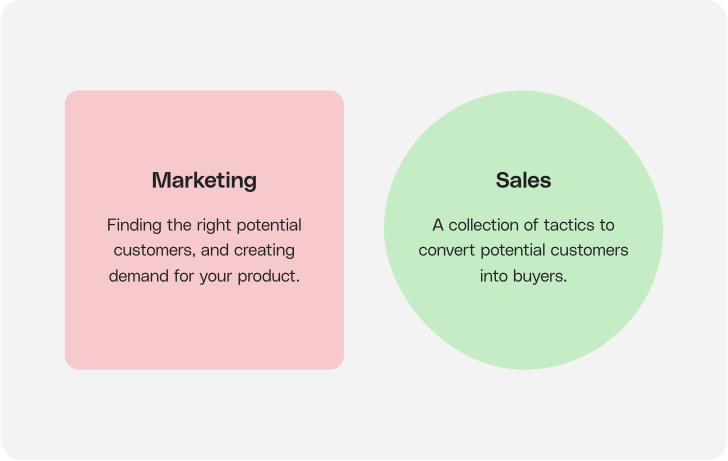
Let’s take a real-life example. Imagine you started a restaurant. You want people to come and eat there, so you publish a post on Facebook. That’s marketing. Once the client comes in, the waiter suggests a more expensive dish from the menu. That’s sales.
In this guide, we’ll focus on the marketing plan and how to bring those customers through the door.
What’s included in a marketing plan?
A marketing plan is made up of a few core parts. Knowing them makes the plan easier to build.
-
Market and competitor research: what you learn about your industry, customers, and rivals.
-
Target audience: the specific people you want to reach.
-
Goals: what you want to achieve, with clear deadlines.
-
Budget: how much you can spend.
-
Channels and tactics: where and how you’ll promote your business.
-
Schedule: when each activity happens.
-
Metrics: the numbers you’ll track to see if it’s working.
Think of these parts as a checklist. When each one has an answer, your plan is ready to put into action.
Steps to create your marketing plan
Here are the three main steps you need to take to create a marketing plan.
Step 1: Research and analysis
This step helps you understand your market, so you choose tactics that actually work.
Before you write your plan, understand your industry, customers, and competitors. Analysis sounds like a scary term. But keep in mind that you’re not isolated from your industry. You’re part of a larger ecosystem. It includes customers, suppliers, competitors, and the broader economic and social context. Knowing what those are can truly benefit your business.
This helps you know who your customers are and what they want. The more you know about them, the easier it is to choose marketing practices that work.
It also helps you define your target audience to fit your business. For example, say your audience prefers to shop online. Then you should consider building an ecommerce site.
As part of the research, look for the following:
-
How old are they?
-
Where do they live?
-
What are their interests?
-
What online services do they use?
-
How do they prefer to shop?
You can talk to real prospective customers. Make sure they’re people other than your family and friends, who might tell you what you want to hear rather than what you need to hear.
Let’s say you’re opening a beauty salon. You probably have some years of experience and a few trusted clients. Start by asking them what they’re missing today, how they choose a salon, and their main pain point with their current one.
To understand the economic environment, you can use existing materials that are extremely helpful. You can also seek the advice of financial advisors and experts. Note that these are usually paid services, so use them if your budget allows.
Understanding market trends helps you decide how to achieve your marketing goals. How do you do that? For one, keep an eye on changes in consumer preferences and behaviors. Watch for shifts in buying habits or rising demand for certain products or services.
You should also stay informed about the latest news and insights from industry thought leaders and influencers. These can be experts in your field or industry publications. Instagram and TikTok are amazing tools to learn about your industry and customers.
Another thing to keep in mind is the seasonality of your product or market, if it exists. Say you own a catering company. Do you operate mainly during spring and summer? What about a gift shop for tourists? What are the tourist seasons in your area?
You should also identify where you do business. If you have a store, are your competitors located nearby? What other stores operate around you? If you operate online, where do you ship your products? If you own a design studio, where are your clients located? These questions all help you understand how to promote your business.
Next, identify three to five main competitors. Studying them shows you what already works in your market and where you can stand out.
-
Identify their main customer touchpoints and the platforms they’re active on. This means where they actually post. If they have an Instagram account but never upload content, it’s not active.
-
Define their unique selling points (USPs). This means how their product or service differs from others, and what makes them unique. Try to identify how they position their business.
-
Understand who their primary target audience is. This is sometimes hard to identify, and that’s okay. If you can find the answer, great. If not, it’s fine to skip it. Some things are easy to find (for example, a fashion boutique may target women, and its storefront may hint at a younger or older audience).
-
Identify how they price their products. You want to make sure your pricing is competitive.
-
Check what promotions and deals they offer their customers.
Now that you know your industry and competitors, we recommend identifying the state of your own business. One way to do this is by using the SWOT analysis model.
What does that mean? SWOT is an acronym for strengths, weaknesses, opportunities, and threats. It’s a simple yet powerful tool. It can help you evaluate your business, assess your competition, and identify areas for improvement.
Strengths and weaknesses are internal factors, like your product’s quality, reputation, and team. Opportunities and threats are external factors, like competitors, market trends, pricing, and supply chain issues.
Check out a few examples of what’s included in each section:
Step 2: Build your plan
It’s crucial to know what you hope to achieve with your marketing efforts. Do you want to get your name out there, acquire new customers, or increase loyalty? Your goals help determine the marketing tactic that’s right for your business. Always come back to these goals. Make sure every marketing action you take, big or small, contributes to one of them.
First, define how much you want to invest in marketing. Make sure this budget is realistic. As a growing business, you don’t want to go into debt or hurt your cash flow. Your budget has to be defined by your business plan.
Set specific, measurable goals with deadlines. For example, increase sales by 15% within six months. Clear targets make it easy to see whether your plan is working.
Step 3: Create your marketing schedule
Create a list of all the marketing actions you need to take to reach your goals. We’ll cover a few tactic ideas in the next section. Divide those actions into “must-haves” and “nice-to-haves.”
Create a list of tasks for each tactic you’re using. Include actions like building or revamping your website, holiday promotions, launching new products, and social media campaigns. Try to plan one marketing effort a month.
Put these tactics onto a Gantt chart. A Gantt chart is a bar chart that shows a project schedule over time. It helps you plan a project and set the order of tasks. Consider long-term tasks like website building and short-term efforts like a holiday promotion. You don’t need sophisticated software to create your chart. Use Google Sheets and create a plan that’s easy for you to understand.
Here’s an example of such a chart:
Start marketing your business on a small budget
Even if you don’t have a lot of money to spend on marketing, there are quite a few things you can still do to market your small business.
Build a website and promote it
Many shoppers check a business’s website before visiting in person. And yet plenty of small businesses still don’t have one. Even if most of your customers are walk-ins, an online presence can help you gain more. We’re not talking about ecommerce. A basic web page with your business name, details, a short description, and some visuals is enough to get set up.
You can use free do-it-yourself platforms to build your website yourself. Or you can use more advanced tools if your budget allows.
Build your community and brand with social media
Social media is a powerful, accessible, and inexpensive platform for small businesses. You can use it to market yourself and keep in touch with your community of customers. The vast majority of small businesses now use social media to reach and engage customers.
With so many purchases now done through social media, it’s crucial for businesses to be there too. See what platforms your competitors are using, and join in. For help getting started, check out this beginners’ guide.
On social media, you can create content and build a follower base without spending money. If your budget allows, you can also pay for ads to reach target audiences across social channels, or boost your posts for a small cost.
Start a customer club or loyalty plan
Loyalty programs reward your existing customers for staying loyal. You can run these programs digitally with an app, or through physical cards or points. For example, you can offer points that customers redeem later for physical goods.
First, you’ll need to collect email addresses. You can do that through your website, at the store, or via social media.
Send your customers a monthly newsletter. Encourage them to refer friends and family by offering an incentive to do so. This is a low-cost way to reach many people who already show interest in what you do.
Offer holiday promotions and discounts
Whether you sell in a store or online, you can use holidays and special events to make your business stand out. During the holidays, people tend to spend and buy more. If you offer a holiday discount and promote the deal on social media, this can increase your sales.
Remember, you don’t have to offer a huge discount on your products. This is actually an opportunity to clear out stock and make space for new arrivals. Any promotion is a good chance to post on social media and drive traffic to your store or website.
Have a storefront? Be creative
Adding a little spice to your shop can help set it apart during busy shopping seasons. Whether you decorate for a specific holiday or for the season, don’t be afraid to get creative with your storefront.
To drive extra foot traffic, you can even offer food tastings, live music, raffles, and other unique in-person experiences.
Use decorations to promote your special offers for holidays, special occasions, and seasons. If you’re having a sale, make sure a big sign lets people know about it.
Marketing terms worth knowing
Here are some key terms to get familiar with before you create a marketing plan.
Brand
A brand is a company or product that consumers recognize by its name. Ideally, brand awareness includes positive perceptions of the qualities that set the product apart from its competition.
Not every business is a brand name, but that doesn’t mean it’s unknown. Think of the most famous local restaurant in your hometown. When you talk about it with your neighbors, they know what you mean from the name alone, right? When we talk about a brand, we mean something simple: your customers know who you are.
KPIs
Key performance indicators (KPIs) are the metrics you use to measure how a campaign performs. Set a few simple ones early, like how many people visited your store after an ad ran.
Leads
In marketing, leads are any people or organizations within your reach who have interacted with your business. They have the potential to become customers.
SEO
Search engine optimization (SEO) is the process of improving your site to increase its visibility on Google, Bing, and other search engines. For example, say you own a barber shop in Atlanta. You want your website to show up when someone searches for “barber shop in Atlanta.”
B2C and B2B companies
Two common business types shape the marketing you choose:
-
B2C (business to consumer): selling products or services directly to individual end users.
-
B2B (business to business): selling to other businesses.
Consumer journey
A customer journey is a map of all the interactions customers have with your company or product. These can be sales calls, website visits, or hearing about it at an event. No two customer journeys are the same. Still, marketers can project certain journeys and guide customers along a specific path, which can help increase sales.
USPs
A unique selling proposition (USP) is the unique benefit or advantage that a product, service, or brand offers customers. It sets the product apart from its competitors. USPs are often used in advertising to highlight what makes a product or service stand out.
ROI
Return on investment (ROI) measures the profit of an investment relative to its cost, shown as a percentage. Say you invest $10,000 in a campaign and it generates $15,000 in extra sales. Your ROI is 50%.
Retention
Retention is a business’s ability to keep its customers, clients, or employees over time. It’s often measured as the percentage of customers who stay over a set period, such as a year or a quarter. Retention can be a customer coming back for another purchase or a user who keeps using your service. It matters because it can have a big impact on the success and profitability of a business. Retaining existing customers is often more cost-effective than acquiring new ones.
Use marketing to grow your business
There comes a time in a business’s life when you’re ready to grow. A strong marketing plan is crucial for success, especially during stages of growth and expansion. There are many things you can do on your own, but hiring a professional can go a long way. The money and time they save you are worth it, and the success you could gain is priceless.
Looking to build a marketing strategy? Start here
Marketing plan FAQs
What are the 5 P’s of a marketing plan?
The 5 P’s are product, price, place, promotion, and people. They’re a simple way to check that your plan covers what you sell, what it costs, where you sell it, how you promote it, and who’s involved.
What’s the difference between a marketing plan and a business plan?
A business plan covers your whole company, including finances and operations. A marketing plan is one part of it, focused only on how you’ll reach and win customers.
How often should you update your marketing plan?
Review your plan at least once a year, and check in every quarter. Update it sooner if your budget, goals, or market change.

How To Pay All Your Vendors In One Place with Business Bill Pay
Discover how to pay all your vendors in one place and save hours every month on business bills.

How To Grow A Successful Accounting Firm In A Narrow Niche
Learn how one founder grew a niche accounting firm by focusing on the right clients and technology.

Thanksgiving Marketing Ideas You Can Launch in Time For The Weekend
Grow your business this Thanksgiving weekend with simple marketing ideas you can launch fast.