Cash Flow Problems: How to Diagnose and Fix the Causes
Learn how to diagnose the real causes of your clients’ cash flow problems and prescribe fixes that work.


Key takeaways
- Diagnose the root causes of cash flow problems by mapping your client’s accounts receivable and accounts payable processes, not just reading the financial statements.
- Recognize that a timing gap between AR days and AP days can drain cash even when a business is profitable.
- Prescribe practical fixes like faster invoicing, clear payment terms, automated approvals, and one platform to manage inflows and outflows.
- Guide clients past the diagnosis by connecting the data to decisions and following up like a doctor with a patient.
Client complaint
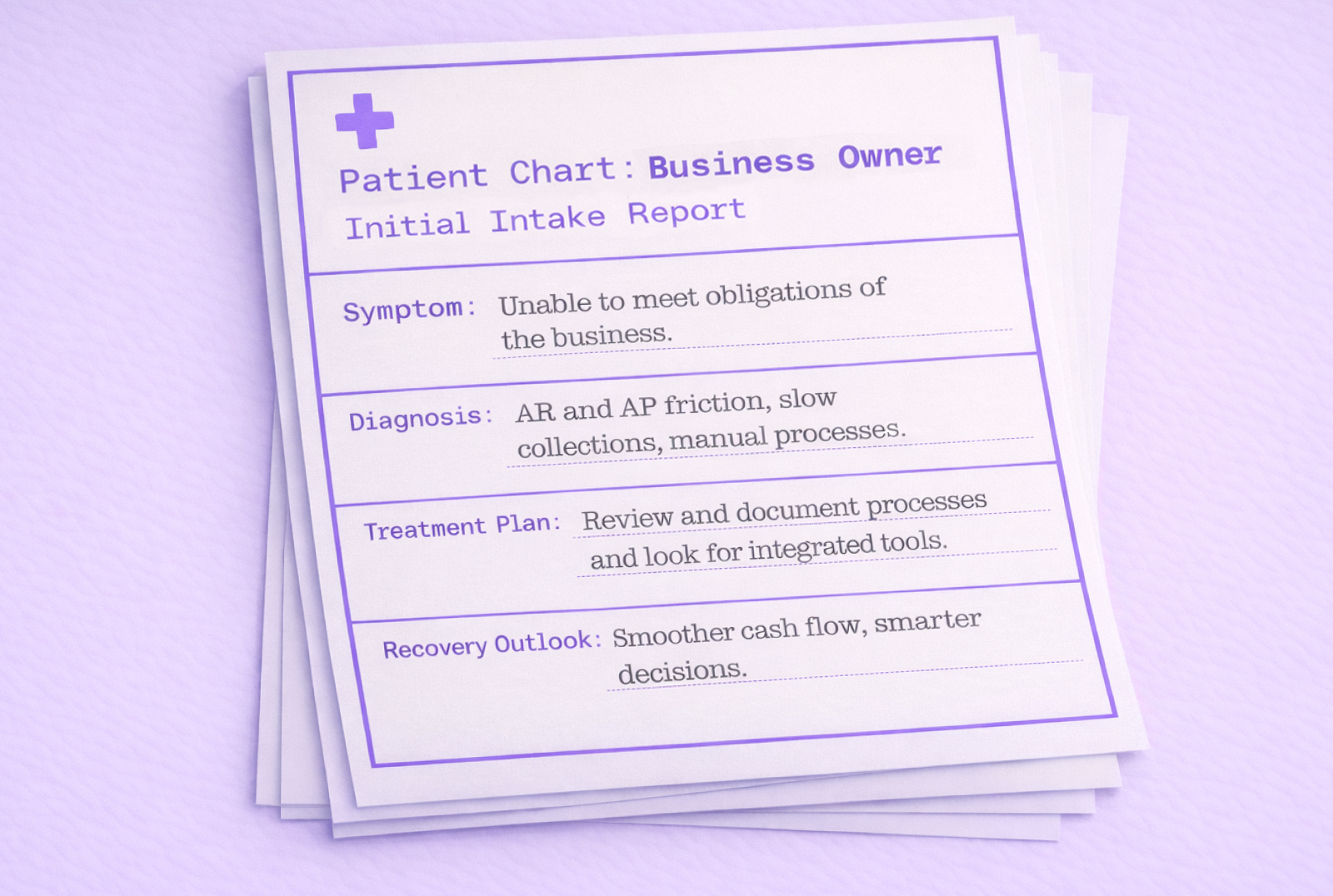
“We are short on cash. We’re juggling too many disconnected tools to manage invoicing and collections. Invoices fall through the cracks, and no one knows who approved what. Our systems don’t talk to each other, and we end up chasing information we should already have.”
Diagnosis: finding the root causes
Just as a doctor gathers lifestyle, history, and genetic data before treating a patient, an advisor must consider the business’s full context. You need to gather information that goes beyond the numbers that end up on the financial statement. You must look for the root causes.
After further investigation and testing, you discover the information below.
Diagnosis: Cash flow is negative
Testing results: AR days = 90, AP days = 60, creating a timing crunch
Contributing factors: Underlying processes and systems don’t support business needs.
Symptoms: Disconnected billing, clogged workflows, limited payment options, reliance on manual W-9 and 1099 processes.
Why it matters: Cash is the lifeblood of any business. If payments are delayed, employees may not get paid, obligations can be missed, and trust begins to erode. Just like a regular heartbeat in the human body, steady and reliable cash flow is what keeps the system functioning.
We need to look at the underlying operating systems to begin taking corrective action.
Common cash flow problems and their root causes
Cash flow problems happen when the timing of money coming in does not match the money going out. The most common root causes sit in your accounts receivable and accounts payable processes. Even a profitable business can run short on cash when inflows lag behind outflows.
These are the patterns advisors see most often:
- Slow collections: Invoices go out late or reminders are inconsistent, so customers pay well past their terms.
- Mismatched timing: Money owed to vendors comes due before customer payments arrive, creating a squeeze.
- Disconnected tools: Billing, approvals, and accounting systems don’t talk to each other, so information falls through the cracks.
- Limited payment options: Customers can’t pay the way they want, which delays the moment cash lands in the account.
- Manual, unclear workflows: No one knows who approved what, and routine tasks depend on memory rather than a documented process.
Naming the pattern is the first step. The next is mapping where the friction lives so you can treat the cause, not just the symptom.
Operations: the heart of the issue
Operations drive cash flow. If cash is the heartbeat, operations are the muscle moving cash in and out of the business, through accounts receivable (inflows) and accounts payable (outflows). More often than not, the issue is not a single failure, but a breakdown in process flow.
As advisors, our first goal is to understand the business’s operational process, from how revenue is earned to how expenses are paid. Then we can diagnose where the arteries are blocked and determine what specific actions can restore healthy function.
Inflows: accounts receivable
Knowing that your AR days is currently 90 gives you clarity on the extent of the pain. But you have to dig deeper to identify the contributing factors.
Further testing and inquiry
You can start by mapping out their accounts receivable processes. Gather their team and have each person identify their role in the process. Your role is to be the facilitator. This will allow you to help the team understand all of the actions that lead to their collections problem.
On the AR side, the process might include these components:
Customer inquiry > proposal > acceptance > service delivery > billing > collections > payment.
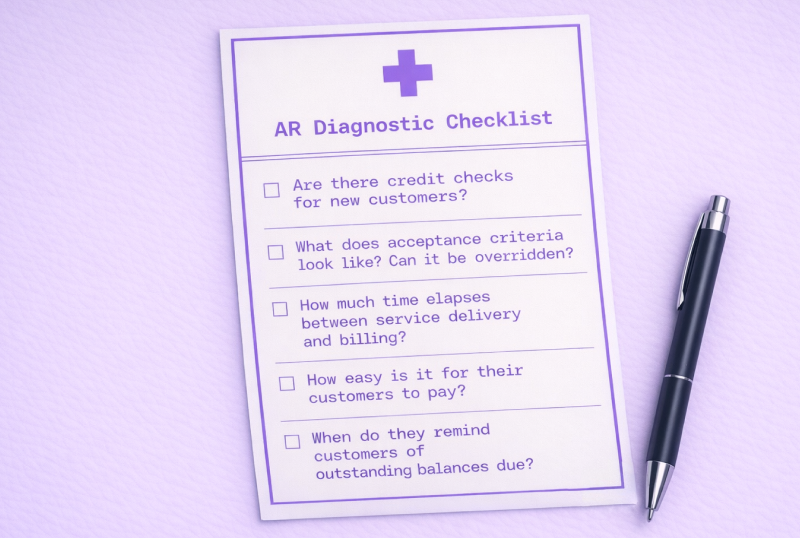
Identify areas of friction by asking your client:
- Are there credit checks for new customers?
- What does acceptance criteria look like? Can it be overridden?
- How much time elapses between service delivery and billing?
- How easy is it for their customers to pay?
- When do they remind customers of outstanding balances due?
Now you have the insights you need to help your client and their team move toward a solution.
Client prescription – AR
There are many ways you can help your client return to optimal health:
- Document credit policies: Review and document credit policies and payment terms to ensure they are aligned with cash flow needs and client goals.
- Set improvement goals: Once you have identified the bottlenecks, you can help your client and their teams create goals and measures for improvement. For example, if the current delay between service delivery and billing is averaging 20 days, you might agree to focus on shortening that to 10 days. Engage the teams in finding ways to speed up the process and create visible measures they can monitor regularly.
- Remove collections friction: Recommend a tech-based solution which can streamline invoicing, automate payment reminders, and allow customers to choose how they wish to pay. (I personally like and recommend Melio for this)
Outflows: accounts payable
If cash is the heartbeat, then AP is the outflow valve. Just as uncontrolled bleeding is dangerous to the body, unmanaged or inefficient payables can sap a business’s strength, even when revenue is strong.
Knowing that AP days are sitting at 60, while AR days stretch to 90, gives you a starting point for your diagnosis. But you’ll need to look deeper to find the cause of the suffering.
Further testing and inquiry
Start by mapping out your client’s accounts payable process. This often begins not with a bill, but with the intent to spend. Gather the team to outline every step and every stakeholder involved. As an advisor, your role is to facilitate the discussion and highlight breakdowns in visibility, communication, or timing.
The AP process generally includes:
Solution review > vendor selection > contract acceptance > purchase approval > vendor onboarding > service or product delivery > invoice receipt > approval to pay > payment execution
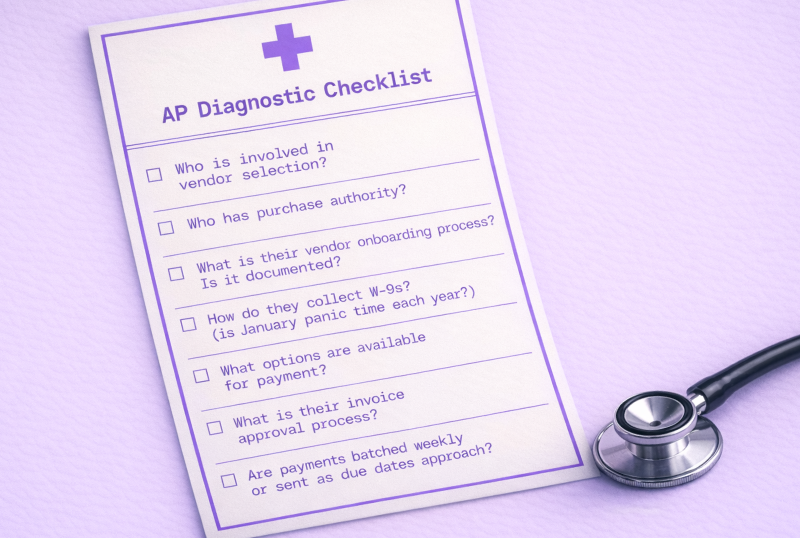
Identify areas of friction by asking your client:
- Who is involved in vendor selection?
- Who has purchase authority?
- What is their vendor onboarding process? Is it documented?
- How do they collect W-9s? (is January panic time each year?)
- What options are available for payment?
- What is their invoice approval process?
- Are payments batched weekly or sent as due dates approach?
These questions help uncover timing delays, inconsistent handoffs, and manual tasks that often go unexamined.
Client prescription – AP
Once friction points are identified, you can guide clients in designing a healthier, more responsive AP system. Some specific prescriptions might include:
- Streamline vendor onboarding: Include automated W-9 collection, reducing the year-end 1099 scramble and ensuring vendors are classified properly from the start.
- Implement digital purchase approvals: Use tools that enforce pre-authorization and create an audit trail.
- Route invoices digitally: Send them via a digital inbox to the appropriate person or team, rather than relying on email chains or desk piles.
- Centralize payment workflows: Use a secure platform, giving clients flexible options such as same-day ACH, wire transfers, or even paying by credit card (while vendors still receive ACH or checks).
- Align review with delivery: Match invoice review with service delivery tracking, ensuring that internal teams confirm receipt of service or payment milestones before approving payment.
- Integrate payment data: Connect it with accounting systems (e.g., QuickBooks Online or Xero) to eliminate duplication and give you, the advisor, a single source of truth.
Choosing the right AP software could help navigate all or most of these tasks to drive meaningful improvements in how your clients pay bills and manage their cash flow. That’s where a solution like Melio fits in, offering a streamlined platform to manage all your essential AP tasks (and AR too if you handle that on behalf of your clients).
Become the doctor, not just the diagnostician
As accountants, we often stop short of prescribing real solutions. But clients aren’t looking for a diagnosis—they want to feel better. We can guide them toward the right tools, streamline their operations, and most importantly, connect the data to the decisions they care about most.
Our job is to give them information they can understand so they can make better, more timely decisions. That means staying informed about their needs and about the tools and technology available to address today’s and tomorrow’s challenges.
Just like a doctor follows up with their patients, we must stay involved and help our clients make informed decisions that support the long-term health of their business.
Learn more about Melio’s AP and AR solutions for firms. Want to try it for yourself? Sign up to Melio for free.
Geni Whitehouse, CPA, is a winery consultant at Brotemarkle, Davis and Co in Napa Valley, where she helps business owners move beyond financial statements to address the operational and systems issues that drive cash flow and performance. She is the founder of The Impactful Advisor, a training platform focused on teaching accountants how to deliver meaningful advisory services that connect data to decisions. As a longtime educator and advisor, Geni is known for making complex topics practical, approachable, and actionable for both business owners and the professionals who serve them.
Cash flow problems FAQs
How do you fix a cash flow problem?
Start by finding the root cause, then treat it. Map your accounts receivable and accounts payable processes, spot where payments stall, and put fixes in place such as faster invoicing, clear payment terms, and a single platform to manage what comes in and goes out.
What are the warning signs of poor cash flow?
Watch for rising accounts receivable days, bills paid late, constant chasing of invoices, and no clear view of who approved what. These signs often show up before the numbers on the financial statement do.
How do accounts receivable and accounts payable affect cash flow?
Accounts receivable is the money coming in and accounts payable is the money going out. When receivables move slower than payables, a timing gap opens up and cash runs short, even when the business is profitable.

What Is Batch Payment? How to Pay Multiple Bills at Once
Learn what a batch payment is and how to pay multiple bills at once to save time.

Freight Technology: Tools to Move Your Business Forward
Discover how freight technology, from tracking to digital payments, can push your business forward.

How Safe Are ACH payments? Risks and How To Stay Secure
Learn how safe ACH payments are, and how to protect your business from fraud.