Accounts Payable Automation: How It Works and Why SMBs Need It
Learn how accounts payable automation works and why SMBs use it to save time and control cash flow.

- Key takeaways
- What is accounts payable automation?
- How does accounts payable automation work?
- Why do SMBs need accounts payable automation?
- Key benefits of accounts payable automation
- What to look for in accounts payable software
- Accounts payable automation best practices
- Simplify accounts payable with Melio
- Accounts payable automation FAQs
Key takeaways
-
Accounts payable automation uses software to capture invoices, validate the details, route approvals, and send payments with far less manual work.
-
For SMBs, it means fewer late payments, clearer cash flow, and simpler recordkeeping when tax season and 1099 tracking roll around.
-
The right accounts payable software connects to your accounting tools, fits your approval rules, and offers flexible ways to pay.
-
Start small by cleaning up vendor records and automating your highest-volume invoices first.
What is accounts payable automation?
Accounts payable automation is the use of software to handle the bills your business owes. It replaces the manual steps of keying in invoices, chasing approvals, and cutting checks. People often shorten it to AP automation.
Think about how accounts payable usually works. An invoice arrives, someone types it into a spreadsheet, an approver signs off, and a check goes out. Each step invites errors and delays.
AP automation software takes over that busywork. It reads invoices, matches them to your records, and moves them through your accounts payable workflow. You stay in control, but the software does the heavy lifting.
How does accounts payable automation work?
Most accounts payable automation solutions follow the same five stages, from the moment an invoice lands to the final report.
Invoice capture
First, the software pulls in your invoices from email, uploads, or a vendor portal. It uses optical character recognition (OCR) to read the text on each document. OCR turns a scanned invoice into data your system can use, so no one has to type it by hand.
Data validation and matching
Next, the software checks that the invoice details are correct. It compares the invoice against your purchase order and the goods you received. This is called three-way matching, and it confirms you only pay for what you actually ordered and got.
Approval workflows
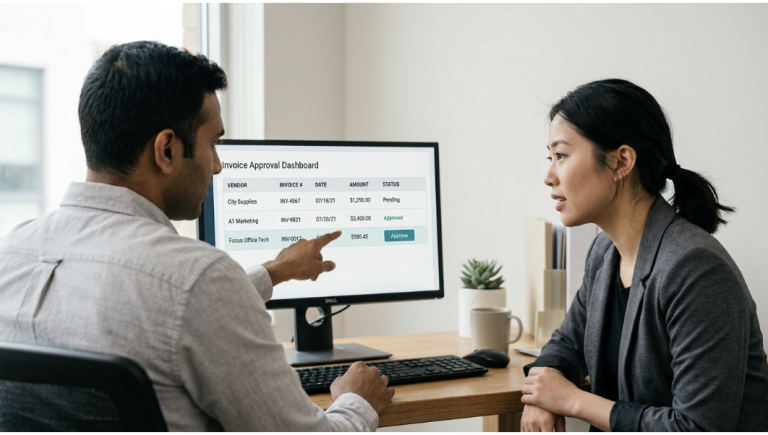
Once an invoice checks out, it moves to the right person for sign-off. Approval workflows route each bill based on rules you set, like the amount or the department. Approvers get a notification, review the invoice, and approve it in a click.
Payment execution
After approval, it is time to pay. Good software lets you choose how, whether that is a bank transfer over the ACH network or a card. Paying by ACH is often free, and paying by card can help you hold on to cash longer.
Reconciliation and reporting
Finally, the software records each payment and syncs it with your accounting tool. Reconciliation happens on its own, so your books stay current. You also get reports that show what you owe, what you paid, and where your money went.
Why do SMBs need accounts payable automation?
Manual AP quietly drains small businesses. Every invoice you type, every approval you chase, and every check you mail eats into hours you could spend growing the business.
Late payments are the bigger risk. A missed due date can mean fees, a strained vendor relationship, or a lost early-payment discount. When bills live in a stack on someone’s desk, deadlines slip.
Cash flow visibility suffers too. Without a clear view of what you owe and when, it is hard to plan. Digital tools can turn these accounts payable pains into real time savings.
There is also the paperwork side. You need clean records of every vendor payment, especially for contractors. If you pay contractors, you may need to file a Form 1099. Automation tracks those payments for you, so the numbers are ready when you need them.
Key benefits of accounts payable automation
The accounts payable automation benefits go well beyond saving a few clicks.
Time and cost savings
Automation handles the repetitive parts of invoice processing, so your team spends less time on data entry. That means fewer hours on manual work and lower processing costs per bill. Those saved hours add up fast across a busy month.
Fewer errors and less fraud
Manual entry leads to typos, duplicate payments, and the occasional missed bill. Automation checks each invoice against your records, so mistakes get caught early. Approval controls also make it harder for a fraudulent invoice to slip through.
Better cash flow control
With every bill in one place, you can see exactly what is due and when. You choose when and how to pay, which helps you manage cash flow with confidence. Here is how AP automation gives you more room to breathe.
What to look for in accounts payable software
Not every tool fits every business. When you compare accounts payable software, keep a few things in mind so you pick one that actually helps.
-
Accounting integration: it should sync with QuickBooks, Xero, or whatever you already use, so your books stay in step.
-
Ease of use: your team should be able to learn it quickly without a long setup or heavy training.
-
Flexible payment methods: look for both ACH and card options, so you can pay each vendor the way that works best.
-
Approval controls: the software should let you set clear rules for who signs off on what.
-
Fair pricing: watch for hidden fees, and choose a plan that matches how many bills you pay.
For a deeper look, here is how to choose AP software that suits a small business. The best AP automation software feels simple on day one.
Accounts payable automation best practices
A few habits make the switch smoother. These accounts payable automation best practices help you get value quickly.
-
Clean up vendor records first. Fix duplicate entries and outdated details before you automate, so bad data does not carry over.
-
Set clear approval rules. Decide who approves which bills and at what amounts, then build those rules into the software.
-
Start with your highest-volume invoices. Automate the bills you handle most often first, where the time savings are biggest.
-
Keep a digital audit trail. Store every invoice and approval in one place to support clean recordkeeping at tax time.
If you handle books for others, these steps also make it easier to offer AP services to your clients.
Simplify accounts payable with Melio
Melio brings your bill pay into one simple place. You can capture invoices, set up approvals, and pay vendors by bank transfer or card, all without the paper shuffle. Your payments sync with QuickBooks and Xero, so your books stay current.
The goal is to give you back time and a clearer view of your cash flow. You choose how to pay, and your vendors get paid the way they prefer.
Sign up for Melio and see how much simpler paying bills can be.
Accounts payable automation FAQs
Here are answers to a few frequently asked questions (FAQs) about accounts payable automation.
Is AI replacing accounts payable jobs?
Not really. Automation takes over repetitive tasks like data entry and matching. That frees your team to focus on judgment calls, vendor relationships, and planning.
How long does it take to implement accounts payable automation?
It depends on the tool and your setup. Many SMBs start paying bills within a day or two, then add approvals and syncing as they go.
This content is for informational purposes only and should not be considered financial, legal, tax, or accounting advice. Melio does not provide professional advisory services. Always consult a qualified professional before making financial or business decisions.

How AI Redefines Accounts Payable And Receivable Processes
See how AI makes accounts payable and receivable faster, simpler, and less prone to costly errors.

Your payment platform works fine. That's the problem.
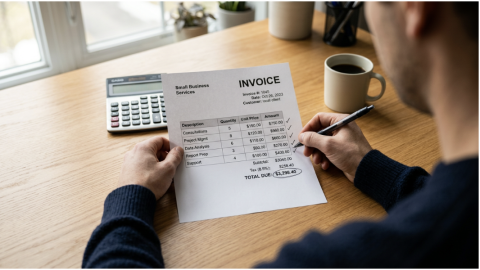
What Is an Invoice? A Guide for Small Business Owners
Learn what an invoice is and how to use it to get paid on time as a small business owner.