Accounts Payable: Asset Or Liability? Key Answers Explained
Find out whether accounts payable is an asset or a liability, and exactly where it sits on your balance sheet.


Key takeaways
- Recognize that accounts payable is a current liability, since it is money your business owes suppliers for goods or services already received.
- Find accounts payable under current liabilities on the balance sheet, never among your assets.
- Record accounts payable as a credit when a bill arrives and a debit when you pay it.
- Prioritize paying accounts payable on time to protect your cash flow and keep vendor relationships strong.
What’s accounts payable?
What is accounts payable? Also knows as AP, accounts payable is the total amount of short-term debt your business owes to creditors and suppliers for services or goods you bought but have not paid for yet.
Businesses often buy goods from suppliers on credit, with the invoice due at an agreed time, such as 30 or 60 days from receipt. Until the invoice is paid, the debt owed to the supplier comes under the umbrella of accounts payable.
If goods or services are purchased with cash, there is no short-term debt, meaning it’s not included under accounts payable.
Is accounts payable an expense? No. When it comes to accounts payable vs expenses, expenses have already been paid for and are recorded as paid in your accounting books. There is no outstanding debt, and therefore they are not considered accounts payable.
One last thing: what is the difference between accounts payable vs accounts receivable you ask?
They are essentially flip sides of the same coin. Accounts payable is the bills (ie. debt) owed by a business within an accounting period. Accounts receivable is the money owed to the business by its customers, in exchange for any goods or services provided.
Real-world accounts payable example
Let’s say a bakery buys $4,000 worth of baking ingredients, which will be used over the next month. Payment is due to the supplier within 30 days from the invoice date. This amount is listed under accounts payable in the bakery’s bookkeeping records until it is paid.
The bakery will have other accounts payable items listed. For example, a repair bill for an oven technician or a new staff uniform.
For small businesses, keeping your AP organized will help ensure a healthy cash flow and maintain your relationships with vendors. Check out these accounts payable tips for small businesses to improve your accounts payable processes.
Balance sheet presentation of accounts payable
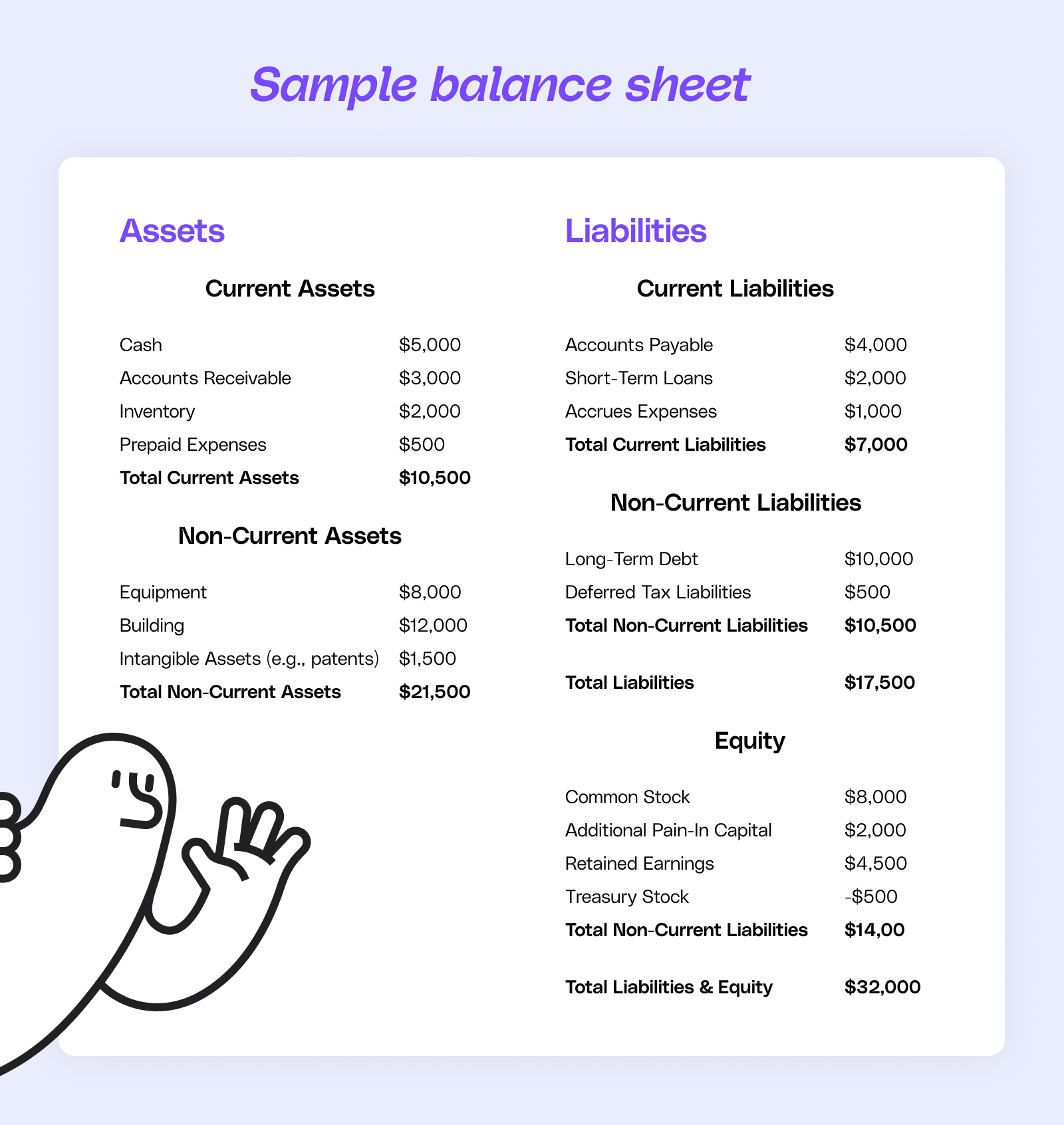
What does accounts payable look like on a balance sheet? You can find it as a line item under the “Current Liabilities” section of a standard balance sheet.
If you use an accounts payable software for small businesses that syncs with your accounting software, you can automatically incorporate your accounts payable data as a record in your balance sheet along with all your other assets and liabilities.
How do you record accounts payable transactions?
There are several steps involved in the process of recording accounts payable transactions:
- Invoice is received: The invoice from the supplier or vendor is received after the goods or services have been provided.
- Invoice is approved: You or your bookkeeper check the invoice to make sure it is correct. If so, the invoice is approved.
- Invoice is recorded: The details of the approved invoice are recorded in the accounting software, including date, amount, and details of the goods or service received. This information is also recorded in the general ledger, where it is noted under accounts payable.
- Invoice is paid: The payment is made for the invoice, preferably within the due date. The amount is removed from the accounts payable record, and becomes an expense.
What are assets?
In trying to understand what is accounts payable, assets or liabilities, it is important to understand what each term means.
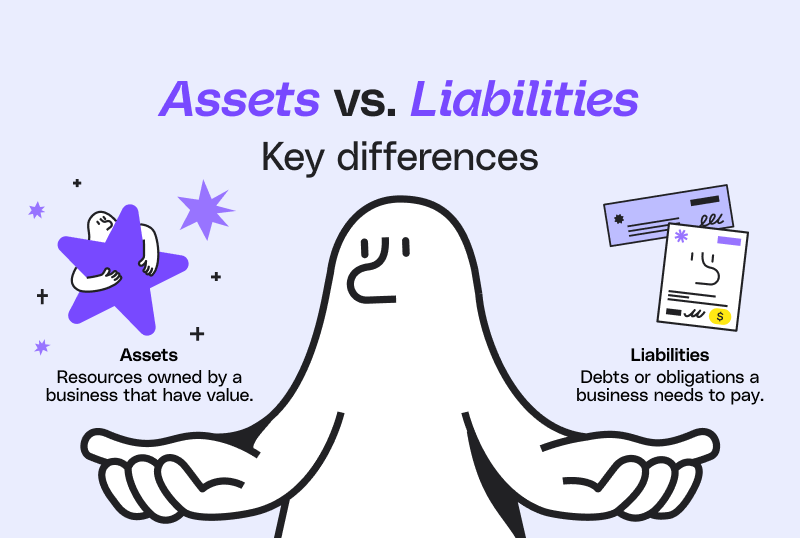
Let’s start with assets. Assets are anything that has monetary value in your business. That includes anything that the business can financially claim.
For example, assets can be:
- Cash or cash equivalents
- Equipment
- Supplies
- Property (ie. a shop premises or office that is owned by the business)
- All amounts in accounts receivable: payments for unpaid invoices owed to the business are assets.
There are several types of assets, which we’ll explore below:
Current assets
Current assets are assets that are used within a period of up to one year. These are short-term assets that are necessary for the day-to-day operations of a business. For example, inventory, prepaid expenses, and accounts receivable (money owed by customers who have been invoiced) are all short-term or current assets.
Fixed assets
On the other hand, fixed assets are assets that have a longer-term lifespan of over a year. Fixed assets include owned property, equipment, machinery, and vehicles that are used to run the business and produce the goods or service that the business provides.
Other types of assets
There are other kinds of assets that may be relevant to your accounting operations.
Financial assets, for example, include cash, stocks, bonds, mutual funds, and other liquid assets. In contrast to assets like property or equipment, financial assets may not necessarily have a physical form. The value of a financial asset lies in the ownership claim or contractual right to a future payment from the entity.
Intangible assets are assets that do not have a physical form, yet add value to a business. Examples of intangible assets include a brand, intellectual property, and even goodwill among the consumer market.
Intangible assets are considered long-term assets, whose value ideally increases over time. Intangible assets can become tangible if they are bound by a contract. For example, while a patent is an intangible asset, a contract providing legal permission to use a patent is a tangible asset.
What are liabilities?
Liabilities are the exact opposite of assets. Liabilities are any money that a business owes or has borrowed. In other words, liabilities are a business’s financial obligations or unpaid debts.
For instance, the bakery mentioned earlier took out a small business loan to purchase new custom shelving for the store. The loan is a liability and will remain so until it is fully paid off.
More examples of liabilities include:
- Accounts payable (vendor bills)
- Mortgages
- Loans
- Unpaid expenses (accrued expenses)
- Wages
- Interest payable
- Warranties
Let’s explore some of the key types of liabilities on a typical accounting balance sheet:
Current liabilities
Current liabilities are short-term liabilities that are due for payment within one year. The time frame for current liabilities may be shorter than that, depending on the business’s operating cycle. Accounts payable, which includes any short-term debt or bills, is one of the items under the “Current Liabilities” section of a balance sheet.
Non-current liabilities
Non-current liabilities are long-term debts recorded on a balance sheet that are not due for payment in the coming year. For this reason, they are also called “long-term liabilities”.
Examples of non-current liabilities include long-term borrowings or loans, long-term leases, deferred taxes, and liabilities on derivatives, to name a few.
Contingent liabilities
Contingent liabilities are a bit more complex. They refer to expenses that may occur in the future or as a result of an unforeseen event. For example, having to pay out a product warranty is a contingent liability, as it was not certain that the payment would arise. Another example of a contingent liability is a pending lawsuit that may require a business to pay out a claimant when the case is concluded.
How to keep AP liabilities in check
For small to medium-sized businesses (SMB), keeping accounts payable liabilities under control is key to maintaining financial stability and smooth operations. Some companies even choose to outsource accounts payable services to reduce administrative load. Here are several ways that SMBs can better manage their AP—common accounts payable problems and solutions every business should know:
- Create clear payment policies: With clear payment policies and procedures in place, you, your team, and your vendors can stay aligned and avoid misunderstandings.
- Prioritize urgent payments: Build a payment schedule that ensures critical suppliers are paid on time to avoid disrupting your business operations.
- Focus on repayments: Staying up-to-date with loan repayments is essential to avoid penalties and to maintain a good reputation among lenders.
- Keep an eye on cash flow: Plan your payment schedule according to cash inflows to be sure that sufficient funds are available. You can also use Melio to pay by card and defer payments to the end of the billing cycle, allowing you to hold onto cash longer. Monitor your cash flow and if needed, adjust the payment schedule to accommodate it.
- Negotiate payment terms: Where possible, negotiate longer payment terms with suppliers, or even discounts for early payments. This can provide a solid boost to cash flow.
- Build strong vendor relationships: This is essential to achieve favorable payment terms that may allow for flexibility when needed.
Use a bookkeeping tool with automation features: Bill pay platforms like Melio enable businesses to automate invoice processing, set up approval workflows, and choose a payment method that benefits your business needs, making it much easier to stay on top of your AP. Some modern tools even use AI in accounts payable to speed up invoice processing and reduce manual errors.
So, is accounts payable an asset or a liability?
Accounts payable is a liability, not an asset. It represents money your business owes suppliers for goods or services you have already received but not yet paid for.
If you’ve read this far, you already know: it’s a liability.
Let’s return to the bakery example. The business purchased $4,000 worth of ingredients that will be used in the next month or so. The payment terms are 30 days from the date on the invoice. This means that from the date of the invoice, until the bill is paid, the $4,000 amount will appear in the books as accounts payable.
And, of course, accounts payable come under the “Liabilities” section of the balance sheet.
For those wondering is accounts payable a long-term asset let us clarify. AP is a liability, not an asset, and it is a short-term liability. This means that accounts payable only includes payments that are due in the short term, within the coming year or operating cycle.
Is accounts payable a debit or a credit?
Accounts payable is normally a credit balance on your books. You credit accounts payable when you record a bill you owe, and you debit it when you pay the supplier.
Think of it in two simple steps. When a bill arrives, you increase accounts payable with a credit. When you pay, you reduce it with a debit, and your cash goes down too.
This is why accounts payable sits on the liability side of the balance sheet. A credit balance shows money you still owe, not money you own.
Is accounts receivable an asset or liability?
Accounts receivable is an asset, not a liability. It is money owed to your business, so it is the mirror image of accounts payable.
Conversely, accounts receivable is the monies owed to a business for any goods or services provided. It includes all unpaid invoices or short-term credit issued to customers. It is money that will come into the business in the near future. This means that accounts receivable is an asset, listed on the Assets side of the accounting balance sheet, and more specifically, under “Current Assets”.
How to effortlessly manage your accounts payable
Any business, from small to large, will have a steady flow of bills and invoices to pay. Being up to date and accurate with accounts payable is a key element of proper accounting, critical for ensuring cash flow, avoiding late payments, and maintaining good relationships with vendors and suppliers.
That’s why you need to choose the right accounts payable tool to help you.
Melio, for example, is an online platform for businesses to track and record accounts payable, and to pay vendors—all from within one easy tool. It helps with AP/AR automation so you can stay on top of your payment schedule and never miss a payment, as well as pay vendors with bank transfers or by credit card, even vendors who don’t accept cards.
Melio syncs with QuickBooks Online and Xero. This ensures that accounts payable data seamlessly flows from Melio to your balance sheet, with no double effort or time spent on data entry.
What are online payments, and why do they matter for AP? Yes, accounts payable is a technical “liability” on your balance sheet, but it doesn’t have to be a burden on your business operations. Set up your Melio account to make your accounts payable workflow as efficient and smooth as can be.
Accounts payable FAQs
Is accounts payable an asset, liability, or expense?
Accounts payable is a liability. It is money you owe suppliers, not an expense on your income statement and not an asset you own.
Where does accounts payable go on a balance sheet?
Accounts payable appears under current liabilities on the balance sheet, since you usually pay it within a year.
Is accounts payable on the balance sheet or the profit and loss statement?
Accounts payable sits on the balance sheet. The related costs show up as expenses on your profit and loss statement.
Is accounts payable a debit or a credit?
Accounts payable is normally a credit. You credit it when you record a bill and debit it when you pay the supplier.
*This blog post is intended for informational purposes only and is not intended as financial advice.
**Melio does not provide legal, tax or accounting advice, and you should consult with a professional advisor before making any financial decisions.

What Is Per Diem? A Small Business Guide to Rates, Policies and Payments
Learn what per diem is, how rates and taxes work, and how to pay traveling employees with less paperwork.

4 Ways To Prevent Cash Flow Issues In The Construction Industry
Learn practical ways to protect your construction cash flow and keep every project funded.

6 Payment Processing Challenges And How To Solve Them
Accepting payments should be simple, but a few common processing issues can slow your business down.